Skip to content

Attention, trust, creativity: what traditional media are reminding advertising of

Attention, trust, creativity: what traditional media remind advertising of

If attention has now become a structuring KPI, the conference forcefully reminded us of one essential point: attention never exists on its own. It is the result of a fragile balance between context, content, and creativity.

The studies presented confirmed it clearly: attention cannot be decreed — it must be built.

It depends on the editorial environment, the format, the moment… but also — and above all — on a message’s ability to create an emotional connection, to surprise, to make sense.

In other words: creativity is not an optional layer on top of attention. It is one of its core drivers.

When creativity respects attention, it multiplies it

Two cases presented during the conference perfectly illustrated this point.

  • On one side, Hydratis, supported by Buzzman and its media agency Tyers (Havas Group).

  • On the other, Grand Frais (Prosol), with a creative approach led by Rosa Paris (Havas Group).

Two brands. Two universes. But one fundamental common point: never treating attention as a given. In both cases, creativity does not aim to “make noise”, but to create a genuine encounter.

A clear idea. An assertive tone. A form of surprise that respects the audience’s intelligence.

The result: attention is not captured through pressure or repetition, but through adherence.

The decisive role of the media environment

These creative successes also highlight an often-overlooked truth: creativity never exists in a vacuum.

Television — and more broadly traditional media — provide a setting : a recognizable framework, a chosen moment, a more available, more collective, more embodied form of attention.

It is precisely this combination of credible editorial environments, powerful formats, and demanding creativity that allows attention to move beyond a fleeting instant and become a lasting moment — one that fosters memorization and trust.

What platforms attempt to rebuild through technology, data, and algorithms, so-called “traditional” media (in fact, media in transformation) continue to embody through their very nature.

Attention ≠ performance: a necessary reminder

One point came up repeatedly during the discussions, notably emphasized by Radovan Aleksic, Deputy Managing Director, Marketing at FranceTV Publicité: attention is not performance.

It is a necessary condition — never a sufficient one. Measuring attention helps to:

  • better understand real exposure,

  • assess cognitive load,

  • optimize media setups.

But advertising effectiveness does not stop there. Attention prepares the ground. Trust enables the step forward.

Without extension — without proof, without real experience, without post-exposure credibility — attention remains fragile, volatile, reversible.

What traditional media remind advertising of

At its core, the conference conveyed one essential message: advertising is not facing an attention crisis.

It is facing a crisis of meaning and continuity. Traditional media, through their editorial standards and their ability to structure attention, show that another path is possible:

  • creative advertising,

  • respectful of audiences,

  • embedded in trusted environments,

  • designed as a complete experience, not a simple touchpoint.

In a landscape where the temptation is strong to reduce effectiveness to scores, they remind us that attention is an implicit contract.

A contract that binds both media and brands. And without trust, no KPI — however sophisticated — can deliver on its promises over time

The singular role of traditional media

This is perhaps one of the most structuring takeaways of the conference: attention is not captured in the same way across all environments.

Historical media — television in particular — are not mere distribution channels. They are editorial settings:

  • a clearly identified screen,

  • a chosen framework,

  • a shared, collective moment of attention.

This dimension is essential. It creates a different mental availability — less fragmented, less defensive.

An attention that relies not solely on constant stimulation, but on trust in the context itself.

Added to this is a strong cultural and editorial responsibility: programs, content, information, entertainment… traditional media build long-term relationships with their audiences.

👉 It is precisely this combination — editorial credibility, collective attention, responsibility — that platforms struggle to replicate at scale. Not for lack of technology, but because trust does not “scale” like inventory.

From advertiser reactions to a concrete gap

During post-conference discussions with several advertisers, one point surfaced repeatedly.

Those already familiar with the real impact of consumer recommendations — and their decisive weight in purchasing decisions — immediately connected this insight to the current debate around advertising and media.

Not as a theoretical or prospective issue, but as a very concrete gap: the difficulty today of integrating credibility derived from real-world experience into advertising systems that are structured, visible, and measurable at scale.

The feedback was not a critique of media, nor of their effectiveness. It pointed to the absence of mechanisms capable of turning existing trust into explicit, shareable, and lasting proof.

What emerged from these exchanges was not a demand for more promises, but a clear need to once again rely on demonstrable messages — capable of reconciling advertising effectiveness with durable trust.

The missing link: from attention to decision

The conference reiterated it several times: attention is not performance.

It is a prerequisite — never the outcome. Attention prepares the brain: it opens a cognitive window and makes the message audible.

What triggers the decision belongs to another register altogether: proof, real usage, lived experience, post-exposure credibility.

Without proof:

  • attention remains fleeting,

  • memorization is fragile,

  • impact erodes quickly.

With proof:

  • cognitive continuity takes hold,

  • the message anchors itself in reality,

  • trust becomes a lever for action.

Attention creates the context. Proof creates trust. Trust creates impact.

This is precisely the missing link that attention measurement alone — however sophisticated — cannot resolve by itself.

When media turn against each other… value quietly shifts to platform

The Lidl case: a trigger, not the root cause

Let us restate the facts clearly. Lidl France was convicted of misleading advertising after products featured in its TV campaigns were not available for several weeks following their broadcast. The brand subsequently announced its withdrawal from television advertising starting in 2026, judging the regulatory framework to be overly restrictive.

This decision was immediately interpreted as a warning signal for television. But this reading is reductive. Lidl is not questioning the effectiveness of TV advertising.

The brand was sanctioned because a promise broadcast on a trusted medium carries legal responsibility when it cannot be fulfilled. This is not a question of media power. It is a question of demonstrating the promise.

A political response that crystallizes tensions

Following this decision, the French government is preparing a draft decree aimed at easing the regulations governing television advertising for large-scale retail. The text, led by the Ministry of Culture, is expected to be submitted to Arcom, while an impact assessment is currently underway.

This initiative immediately triggered strong and widespread opposition from part of the media ecosystem. In two letters addressed to the Prime Minister and the Minister of Culture, APIG, SEPM, FNPS, Lagardère Radio, NRJ Group, Skyrock, Radio Classique, SIRTI and UPE expressed their “deep concern.”

Their argument is clear: the current regulatory framework, stemming from the 1992 decree, represents a cornerstone of the balance between media financing and the pluralism of information. They point to figures that are difficult to ignore:

  • the advertising market share of the press has been divided by four over the past fifteen years

  • radio advertising revenues have fallen by nearly half,

  • out-of-home advertising is also facing sustained pressure on its traditional revenues.

In this context, further weakening these balances would pose a direct risk to:

  • the financing of professional journalism,

  • local investissement,

  • cultural diversity,

  • and the democratic role of the media.

A fratricidal war… in a market already lost

A deeper discomfort runs through this debate. What we are witnessing today is:

  • the press fighting for its survival,

  • radio defending its funding,

  • out-of-home media warning about the fragility of their local investments,

  • television being forced to justify itself.

Meanwhile, another player continues to advance largely unchecked. For the past fifteen years, digital platforms have been capturing an ever-growing share of global advertising value.

In France, as elsewhere:

  • Google, Meta, Amazon, TikTok and others now account for nearly 70% of the growth of the advertising market,

  • and around 20% of total global digital advertising budgets are absorbed by a handful of global actors, outside any logic of financing media pluralism or information.

In other words: while traditional media oppose one another, value is quietly leaking away.

The troubling asymmetry: strict rules here, looser ones elsewhere

Another reality must be faced head-on. When some advertisers shift toward digital platforms, it is not only for reasons of efficiency or targeting.

It is also because:

  • the rules are more flexible,

  • promises are more implicit,

  • responsibility is more diffuse,

  • and proof of message accuracy is rarely required ex ante.

Television remains one of the most tightly regulated media — precisely because it continues to be one of the most trusted.

This asymmetry is striking. But it should not lead to a simplistic conclusion. Easing regulations without addressing the root of the problem would merely shift the risk, not resolve it.

The real issue the debate still avoids

The core problem is neither television, nor press, nor radio, nor out-of-home media.

The deeper issue is this: advertising has long relied on the authority of the medium itself.

That authority is no longer sufficient. Audiences still exist, attention is still there — but automatic trust has disappeared.

People want to understand, verify, cross-check and confirm. They are not rejecting media. They are rejecting promises that are not demonstrated.

A way forward is possible

Pitting media against one another leads to a dead end. The real challenge is to reconcile reach, credibility and demonstration, regardless of the channel.

This implies:

  • not reducing advertising to a simple message,

  • not locking it into a short-term logic,

  • but rethinking it as a verifiable commitment.

This debate goes far beyond the question of a decree. It touches on the ability of media to remain:

  • credible,

  • financially sustainable,

  • useful,

  • and respected.

Innovation as a condition for survival — and for new revenue streams

In a context of mounting tensions and fragile economic models, one thing is becoming clear: media cannot limit themselves to defending the status quo. Those who have managed to preserve — or recreate — value in recent years have not done so by lowering their standards, but by innovating in how trust is monetised. Audiences still exist, credibility still matters, but value is no longer captured according to yesterday’s rules.

The challenge, therefore, is not to oppose performance and credibility, nor regulation and attractiveness. It is to reconcile these dimensions by inventing advertising formats that are more demonstrative, more transparent and more useful for audiences, while remaining measurable for advertisers. In other words, formats capable of generating new revenues without undermining what constitutes the fundamental value of media: trust.

A deeper trend is emerging. Advertising value no longer rests solely on the message delivered, but on proof of use, real experience and embodied testimony. Consumers are no longer passive targets; they become active contributors who can reinforce message credibility when integrated in a transparent and structured way. In this context, innovation is neither a luxury nor an option — it has become a core condition for media sustainability.

Conclusion

This text is neither a defence of one medium against another, nor a critique of regulation, nor a plea for vested interests. It is an invitation to step back, to look at the ecosystem as a whole, to move beyond sterile oppositions, and to consider innovation as a path toward collective reconstruction.

When media turn against one another, they rarely win — they weaken themselves. When proof becomes central, the entire ecosystem can rebuild and reinvent itself.

The question is not which medium will survive. It is how to restore weight and credibility to advertising in a world of widespread distrust.

TV advertising collapses in Europe: what if it’s a crisis of substance, not just format?

A disappointing start to 2025 for TV advertising revenues in Europe

The latest figures published by Dataxis sound like a warning for the European advertising market. In most major territories, gross revenues for commercial channels declined significantly in the first half of 2025:

⬇️ -8,3% for ProSiebenSat.1 (Germany, Switzerland, Austria)

⬇️ -7,3% for ITV (United Kingdom)

⬇️ -6,6% for RTL (Germany/Austria/Switzerland)

⬇️ -5,1% for Atresmedia (Spain)

⬇️ -2,5% for TF1 (France)

✅ The only notable exception is Mediaset Italy, which managed to record growth of +2.0% thanks to a more integrated media mix (radio, DOOH, digital).

This trend cannot be dismissed as a mere economic anomaly. It reveals a systemic fragility: linear audiences are holding up better than expected in several countries, but monetizing them is becoming increasingly complex.

The reach remains massive, but it is no longer enough to convince, let alone convert. Viewers are no longer captive. They are critical, informed, and suspicious. Advertising effectiveness is therefore no longer just a question of volume or targeting. It now depends on a factor that is more difficult to capture in GRPs: trust.

And it is precisely this divide between exposure and engagement that is jeopardizing the economic model of television advertising. More than a channel issue, it is a content issue.

A sense of déjà vu: after the press, television?

What European television is going through today is nothing new. We saw this movie before—in the press, a decade earlier. Between 2010 and 2020, advertising revenues for print media in France fell by more than 60% (source: ARCOM). In the United States, the collapse was even more dramatic: -70% between 2005 and 2020, according to Pew Research.

And yet, readership had not disappeared. In 2012, nearly 80% of French people still read a newspaper or magazine every week (source: ACPM). But confidence was declining. So were advertisers. The diagnosis was clear:

  • Media perceived as less agile

  • Campaigns deemed less measurable

  • Proof of effectiveness that is too vague in the face of the rise of programmatic advertising and digital KPIs.

The result: gradual disinvestment, falling CPMs, loss of value in use… to the point where certain titles have become totally dependent on subscriptions or public subsidies.

And today, linear television seems to be sliding down the same slope:

  • Audiences remain stable (e.g., +3% for France 2’s prime time in H1 2025).

  • But advertising revenues are falling,

  • And young advertisers perceive it as an opaque, one-way channel, without proof or feedback.

If television simply speaks louder without proving itself more accurate, it could soon join the press in the category of media with a strong advertising history… and a bleak future without transformation.

The case of Le Parisien perfectly illustrates this mechanism. Despite a loyal readership and a strong brand, the daily newspaper recorded losses of €34 million in 2024, prompting its owner LVMH to consider selling it. The reason? A growing difficulty in proving its advertising value. In a market where budgets are being streamlined, advertisers no longer rely on brand awareness alone—they are looking for concrete evidence of impact. And without proof, investment no longer follows.

A dwindling audience, eroding trust

The usual reasons can be cited: fragmentation of usage, the rise of platforms, inflation of advertising formats. All these phenomena do indeed contribute to the decline in the effectiveness of traditional TV campaigns. But they do not explain everything.

Behind these structural dynamics lies a deeper, more pernicious cause: the loss of credibility.

Because it’s not just audience numbers that are declining, it’s active attention, engagement, and trust. Consumers no longer believe in it.

He has learned to decode advertising mechanisms. He recognizes the codes, the tricks, the intentions. And he protects himself from them. Even a prime-time commercial is no longer enough to convince viewers on its own. Too perfect, too scripted, too predictable—it is perceived as a marketing artifact, not a credible recommendation.

In a world where mistrust has become a reflex, where fake news coexists with deepfakes, every message is presumed false until proven otherwise.

And that is where the new challenge lies: the public no longer buys promises, it expects proof.

Repetition no longer sells. Exposure no longer inspires trust. Only proof creates a connection.

In tech, proof is a criterion for excellence

We can cite the classic reasons for advertising decline: fragmentation of usage, constant channel surfing, cognitive fatigue, and overwhelming competition from digital platforms. But behind these surface-level changes, a deeper reality is emerging: the public no longer takes advertising at face value.

The advertising model inherited from the 2000s was based on a simple equation: reach + repetition = memorization. But this equation no longer holds true. Memorization is no longer enough, because engagement no longer follows. Consumers have become evidence readers: they demand facts, guarantees, and feedback. Every advertising promise is initially met with skepticism. Every claim is subject to verification. In this new context, proof is the norm. And what is happening in the tech sector is the clearest illustration of this.

The TechRadar Sustainability Awards, for example, they no longer reward brands for their environmental rhetoric, but for their measured impact: energy savings, product life cycle, repairability index, etc. Storytelling has been relegated to the background. What matters is what has been demonstrated. And this movement is spreading to all sectors:

  • In mass retail, products display Nutri-Score, Yuka, or eco-design ratings.

  • In finance, extra-financial ratings (ESG) determine investment flows.

  • In cosmetics, organic or cruelty-free labels influence purchases more than packaging.

Everywhere, performance is measured by proof. And not just by image. So why should TV advertising be the only one that can do without it? Why continue to invest millions in polished commercials with no proof to back them up, when the entire marketing ecosystem is reorganizing around demonstration? In a world where mistrust is systemic, broadcasting a polished commercial with no proof is like broadcasting an empty message. Creativity alone is no longer enough. You need an anchor in reality. External validation. Visible proof.

By 2025, branding without proof is a luxury that few brands can still afford.

BuyTryShare turns every ad into visible proof

That is precisely BuyTryShare’s mission: to bring proof to the heart of traditional media.

  • By integrating certified consumer reviews (ISO 20488 / NF522) directly into TV, cinema, or press campaigns.

  • By creating short formats (5 seconds) that extend a commercial with real, visible, traceable testimonials.

  • By putting what sells back at the center of the equation: trust.

⚡️ An authentic review = proof. Proof = impact. It’s as simple as that. What if TV regained its value through proof, not pressure?

BVoD platforms are gaining momentum… but remain fragile without proof

Faced with pressure on their advertising revenues, audiovisual groups are accelerating their transformation: more detailed segmentation of offerings, linear/digital hybridization, new attention metrics, AI, and automated purchasing. In France, TF1 Pub, France Télévisions Publicité, and M6 Publicité are adopting convergent strategies:

  • Overhaul of inventories, with packages themed by moments, screens, or target audiences;

  • Launch of transactional platforms, such as TF1 Ad Manager or M6’s data-driven offerings;

  • Enriched KPIs, going beyond GRP: attention, co-viewing, carbon footprint, CSR impact.

In terms of usage, the BVoD trend is accelerating:

  • TF1+ has reached a milestone with 42.5 million unique monthly visitors and 40% growth in advertising revenue in H1 2025. Its integration into Netflix in 2026 marks a turning point: the group’s content will be available in 22 countries and exposed to a global audience, including on AVoD.

  • France.tv remains the leader in terms of volume with 46.6 million unique visitors, a position that has been strengthened since the integration of its offering into the Amazon Prime Video ecosystem, effective since July 2025.

  • M6+ follows at 32 million viewers, with growth more focused on commercial targets.

But this rise in power raises a structural question: what if technology and reach are no longer enough? In a context where algorithmic optimization is becoming the norm, there is a risk of forgetting the essential: the credibility of the message being conveyed.

Without proof embedded in the advertising content itself, even the most intelligent platforms will fail to convince an audience that has become adept at detecting overly polished discourse.

👉 Targeting accurately, yes. But proving it true, even more so.

Advertising has a future, if it agrees to be proven

The decline in revenue is not inevitable. It is a signal. A signal that it is time to reconcile two worlds that advertising has long pitted against each other: power and proof.

✅ No, evidence does not kill creation. It legitimizes it. It supports it. It makes it actionable.

This is precisely what BuyTryShare makes possible: inserting authentic validation into the most powerful formats, without sacrificing visual impact or premium branding.

Ads that don’t just show. They show that you can believe.

Why agencies need BuyTryShare (more than they think)

The context: a model under pressure for media and creative agencies

Whether they are strategic, creative, or media agencies, agencies are facing profound changes in their environment. The traditional model based on the separation of expertise (strategy, creation, media buying) is crumbling in the face of more autonomous clients, more integrated platforms, and an omnipresent focus on performance.

1. Revenues under pressure

Media agencies must deal with:

  • the structural decline in offline budgets,

  • the increasing automation of media buying (programmatic, retail media),

  • and disintermediation, which is prompting more and more advertisers to internalize their purchasing, or even to produce their content directly with in-house studios.

Creative agencies are not spared. The demand for “snackable” content that can be adapted to all formats is driving a race for volume… without any increase in rates.

Example : According to the WARC 2024 report, 61% of global advertising growth is now absorbed by GAMAM platforms (Google, Apple, Meta, Amazon, Microsoft), which offer a one-stop shop for targeting, dynamic creation, distribution, and measurement. This represents direct and formidable competition for traditional agencies.

2. More demanding, more rational customers

The days of validating a campaign based on a strong creative intuition or brilliant storytelling are over. Today, customers expect tangible proof:

  • Accurate post-campaign KPIs,

  • engagement measures (not just audience measures),

  • contribution to sales, traffic, or measured reputation.

Even image campaigns must prove their impact, and test and learn has become the norm, including in TV and billboard advertising.

Example : in 2024, Cetelem (a brand of BNP Paribas Personal Finance) required weekly performance reports on all its TV devices, including branding, requiring its agencies to adopt a strategy of rapid iteration and justification of GRP costs.

3. A lack of differentiation in a saturated market

In a world where all devices are similar—TV commercials, social ads, DOOH, influencers—it becomes difficult for an agency to demonstrate its added value.:

  • The offers are standardized.

  • The mechanics are modeled after each other.

  • Innovation seems to be reserved for large platforms or a few highly specialized agencies.

Example : According to a study by UDECAM (2023), 78% of media budget tenders were not decided on price, but on the ability to offer a differentiating, proprietary, or innovative approach, particularly for cross-channel or multi-sensory campaigns.

And what about creative agencies?

The observation is similar:

  • Pressure on deadlines: “We want the big idea… by noon tomorrow.”

  • Pressure on formats: “We want a viral campaign that works vertically, in square format, in audio, and in 5 seconds.”

  • Pressure on the evidence: “And we want results, fast.”

Except that in 2025, the idea alone is no longer enough. You have to prove that it generates trust, attention, and impact. And that’s precisely where solutions like BuyTryShare enrich what agencies have to offer: by providing a creative, turnkey mechanism that is measurable, easy to activate, and highly distinctive.

Why BuyTryShare is an opportunity for agencies

In this context, where economic pressure, the pursuit of performance, and the commoditization of offerings are weakening agencies, BuyTryShare offers a simple, direct, and powerful solution: a short, integrated, and social proof-oriented format that complements the media plan or creative campaign without reinventing everything.

1) For media agencies

BuyTryShare allows you to enhance an existing media plan by adding proof: an authentic customer review, integrated into a 5-second complementary spot (TV or BVoD), with an activation QR code.

This enables the agency to:

  • justify offline budgets (TV, press, cinema) with measurable KPIs,

  • offer a mechanism that sets you apart from your competitors,

  • build customer loyalty by offering something new, without disrupting execution.

Example: A media agency can integrate BuyTryShare into a campaign for a food product (e.g., yogurt) by adding a post-roll ad with the average customer rating and a certified quote. The recall rate jumps (+41% observed in PoC), and the agency demonstrates an ability to enrich the experience without changing the plan.

2) For creative agencies

BuyTryShare allows you to reconcile the idea and the proof. The agency can script UGC spots as an integral part of the campaign (e.g., capsule with micro-customer testimonials, integration of verbatim quotes into the creative direction, creation of derivative content based on reviews).

She retains control over:

  • artistic direction (tone, style, design of the UGC spot),

  • alignment with the storytelling of the main campaign,

  • writing specific formats based on reviews (e.g., “as seen by our customers” manifesto, adaptation for social media, press, etc.).

Example : For an automotive campaign, a creative agency can produce a series of mini-spots focusing on reviews from real buyers (authenticated via BuyTryShare), with visuals consistent with the main film. This feeds into the brand content strategy while integrating social proof at the heart of the campaign.

In summary

BuyTryShare acts as a smart module that the agency can:

  • connect to an existing strategy without disrupting its organization;

  • offer as added value during a call for tenders;

  • use as leverage in a context where customers are increasingly demanding tangible KPIs.

And above all: it is a replicable, industrializable, and measurable offering that allows agencies to regain control over their own value.

Integrate BuyTryShare into your offering: 3 simple steps for agencies

Are you a media agency or creative agency? Here’s how you can activate your first BuyTryShare campaign for one of your clients, adding a dimension of social proof without disrupting your processes:

① Identify an eligible brand

Ideally, a brand with:

  • A campaign (TV—linear or BVoD, press, or cinema) planned for the coming weeks.

  • A need for commitment, reassurance, or differentiation.

Typical examples: food products, cosmetics, automotive, telecommunications, banking/insurance, healthcare, etc.

② Propose a BuyTryShare PoC to complement the plan

Without changing your media plan or your creative:

  • We offer to create a short 5-second spot based on an authentic, validated review that you produce for your advertising client.

  • We ensure that the reviews and landing page (with review page or e-commerce activation) are compliant.

  • All in 10 days.

Result: social proof integrated into the campaign, an activatable QR code, concrete performance indicators (scan rate, clicks, purchase intent, etc.).

③ Promote your innovation to customers

By offering BuyTryShare:

  • You increase the value of the device,

  • You position yourself as a source of ideas,

  • You open the door to a new revenue stream and enriched storytelling.

Bonus: the PoC can be shared across several brands within the same group. It is a gateway to a lasting partnership.

Want to try it out for one of your customers?

Contact the BuyTryShare team to arrange a presentation or launch a customized PoC.

We support agencies every step of the way, with complete transparency.

➡️ buytryshare.com/contact

C) 2020 > Ferembach.com/CestQuiLesCreas

International Use Cases: How BuyTryShare Adapts Beyond France

a view of the earth from space

Everywhere in the world, the same observations apply:

  • Media ad sales house revenues are structurally declining (particularly in print, but also on TV…);

  • Advertising attention is dropping, especially with intrusive or untrustworthy formats;

  • Consumers demand proof — lived experiences, tangible quality indicators — before buying;

  • Marketing departments want ROI — concrete figures and actionable KPIs to justify their budgets.

BuyTryShare fits into this global dynamic. It is not dependent on any single local market but is built around a flexible triptych:

  • A media campaign (TV — linear and/or BVoD, cinema, press…);

  • A mechanism for collecting and showcasing customer reviews;

  • A link to a landing page or activation journey via QR code or short URL.

All supported by an industrialized SaaS infrastructure, operated in partnership with TERRITORY Influence, a Bertelsmann group subsidiary, whose trnd.com platform is active in more than 10 countries.

Here is an overview of projected scenarios, inspired by operational discussions or standard configurations observed internationally. These examples illustrate how BuyTryShare can be locally adapted, which KPIs may be targeted, and what insights can guide initial rollouts across different cultural and media contexts.

Eastern Europe: Proof of Attention and Purchase in a Test Setup

In several Eastern European countries, projected scenarios with local media partners have helped envision a complete BuyTryShare activation, combining linear or BVoD TV broadcasting with a customer review and conversion mechanism.

Typical setup:

  • A 20” main spot followed by a 5” add-on spot featuring an authentic customer review and a QR code;

  • Recruitment of consumer testers via a certified local micro-influencer platform;

  • Redirection to a dedicated landing page featuring reviews and a special offer or e-commerce link.

Goals of this configuration:

  • Generate post-ad attention via customer reviews;

  • Encourage action via QR code leading to an offer or detailed product info;

  • Collect actionable data for retargeting or CRM follow-up.

Expected or benchmarked results (based on regional media benchmarks and post-campaign studies)

  • QR code scan rate: above 2% in a TV context;

  • Engagement rate on the reviews page: up to +30% versus a standard link

  • Uplift in purchase intent post-exposure: +15 to +20 points depending on projected studies;

  • 30-day repurchase rate: potentially 2x compared to a standard ad journey without social proof.

These projections serve as a reference model for BuyTryShare’s first PoCs, to be adapted depending on the media channel (linear or BVoD), industry sector, target audience, and local QR code usage habits.

Southern Europe: Combining TV and Social Ads through Social Proof

In discussions with audiovisual players in Southern Europe, several scenarios have been developed around repurposing customer reviews collected via TV into digital formats, especially social ads.

Projected setup :

  • Integration of a quote or rating in a TV spot + QR code linking to a reviews page;

  • Repurposing quotes into social ads (Meta/Instagram) for retargeting or acquisition;

  • Cross-activation: linear or BVoD TV combined with digital campaigns led by the brand and its agency.

Expected benefits based on comparable format benchmarks:

  • Increase in CTR for social ads featuring customer reviews: up to +40% versus standard formats

  • Time spent on review pages: over 1 minute on average, signaling higher attention

  • Post-exposure NPS scores potentially reaching between 8 and 9 out of 10 depending on product quality.

These use cases offer an excellent cross-media synergy, turning customer reviews into reusable, high-performing content assets.

Western Europe: Regulatory Precision and Controlled Test & Learn

In certain Western European markets, known for strict advertising regulations (e.g. substantiation, testimonial validation, ASA oversight…), BuyTryShare aligns well with a controlled test & learn strategy.

Projected scenario:

  • TV or BVoD spot followed by a 5” testimonial spot with a QR code;

  • Landing page with certified authenticity of reviews (ISO 20488 / NF522 standards);

  • Option to reuse quotes in eCRM campaigns or sponsored videos.

Observations from similar formats :

  • Campaigns with visible social proof generate better brand recall, especially in sectors like food, banking/insurance, or retail;

  • Consumers are attentive to the “real testimonial” disclaimer in spots — often legally required;

  • UGC-style videos (face-to-camera or animated quotes) drive higher-than-average engagement on social platforms.

The regulatory landscape demands transparency — which aligns perfectly with BuyTryShare’s DNA, whose process has been validated by the ARPP (French ad regulatory authority). (see here)

United States: A Fragmented but Ripe Market

Although BuyTryShare has not yet officially launched in the U.S., several signals show alignment with the expectations of the American market:

  • QR codes in TV ads have surged since 2022, especially during the Super Bowl;

  • “Shoppable ads + reviews” campaigns are booming with players like Walmart Connect, Amazon Ads, and NBC Universal;

  • Consumers are accustomed to scanning and leaving reviews directly via their Smart TVs.

The BuyTryShare logic, centered on the combination of social proof and media power, could quickly find a place in this market — provided local targeting and measurement constraints are well integrated.

What These International Scenarios Teach Us

The various projected international scenarios demonstrate that the BuyTryShare model can be effectively tailored to local realities while maintaining its core identity. In Eastern Europe, pairing customer reviews with promotions drives strong engagement, as long as QR code usability is optimized for mobile. In Central Europe, emotionally sincere testimonial ads resonate well, but TV or BVoD channel selection must match audience habits. In Southern Europe, repurposing customer quotes into social media ads extends campaign life — provided messaging is properly synchronized with CRM. In more regulated markets such as the United Kingdom, the western countries of the EU, credibility and compliance are essential, with stringent legal disclaimers required in broadcast ads. And in the U.S., where QR scanning and social proof are already mainstream, the main challenge lies in managing media inventory fragmentation to ensure consistent exposure and measurement.

Conclusion: a solution designed globally, adapted locally

BuyTryShare is not a fixed model. It is a replicable methodology, built on three universal pillars:

  1. The emotional power of media (linear TV, BVoD, press, cinema…);

  2. The credibility of authentic customer reviews;

  3. The ability to measure, activate and retarget intelligently.

Thanks to the trnd.com platform from TERRITORY Influence, present in over 10 countries, a BuyTryShare PoC can be launched quickly within a locally adapted framework — while maintaining European compliance standards (GDPR, NF522 certification, etc.).

The advertising of tomorrow will be multicultural, connected, verifiable — and driven by the voice of those who truly experience the product: the customers.

Cannes Lions 2025: BuyTryShare, the European voice of advertising transformation

Amidst the creative buzz of Cannes Lions 2025, it was hard not to notice the American dominance on the Croisette: from beaches to rooftops, US giants were out in force—Snapchat, LinkedIn, Netflix, Amazon, Meta, Reddit, Pinterest… Not to mention the Chinese presence of TikTok. And Europe in all this? Almost absent.

Almost.

Only a few initiatives from the Old Continent have stood their ground: RTL (Bertelsmann group), Café Havas, Publicis’ Influential platform, and WPP’s platform. A discreet but strategic presence. And it is precisely in this niche that BuyTryShare has made a name for itself.

Why Cannes? Confronting reality: between skeptics, curious minds, and enthusiasts…

Our presence at Cannes Lions was not a publicity stunt; it was not merely decorative. We were there to engage with the media market in all its diversity: the skeptics, who still doubt the ability of traditional media to reinvent themselves; the curious, intrigued by an approach that combines social proof and short advertising formats; and, of course, the enthusiasts, convinced that the future lies in hybrid, credible, and measurable solutions.

No, BuyTryShare wasn’t on the Croisette to show off, but to listen, debate, and test its value proposition. And the feedback exceeded our expectations. It carried a strong message: reconciling Ad Sales Houses with their ability to capture attention and generate conversion, without relying exclusively on global platforms (as illustrated by the historic agreement between TF1 and Netflix, with the Ta-Dam screen hosting a bouquet of linear channels for the first time).

By integrating social proof (authentic consumer reviews) into media screens (TV, press, cinema), BuyTryShare transforms historically “Top Funnel” channels into “Low Funnel” levers capable of generating direct, traceable, and measurable engagement.

In a context where publishers and advertising sales houses are seeking new growth drivers in the face of the insatiable appetite of platforms, BuyTryShare is empowering traditional media by injecting a layer of data-driven, reliable, and local activation.

Inspiring encounters and strategic validation

Highlights of the festival include:

  • Ilaria Lodigiani, CMO of Barilla, whom we met on RTL Beach, was particularly receptive to our approach. She confirmed that the issue of reassurance through authentic reviews is at the heart of European consumer brand strategies. This is a strong signal for a solution such as BuyTryShare, which places social proof at the heart of the advertising message.

  • On the Plage to be that was the RTL one, we also spoke with Alice Pottiez, Communications Director at Comme J’aime, who confirmed that French people have indeed gotten into the habit of scanning QR codes on television. This is a valuable habit that supports the key action of the BuyTryShare activation, which is rooted in existing behaviors.

  • Our presence at RTL Beach would not have been possible without the kind invitation of Franck Litewka from RTL AdAlliance, whose support for the emergence of innovative European solutions has been constant and committed. His keen insight into changes in the advertising market and his openness to new engagement mechanisms have helped create a real space for listening and dialogue around BuyTryShare.

  • At Port Amazon de la Croisette, during our discussions with a global leader in influencer marketing and UGC content, we received particularly enthusiastic feedback about BuyTryShare. This recognition, coming from a key player in the sector, reinforces the credibility of our vision and confirms the relevance and uniqueness of our model. A testimonial that lends credibility to our vision..

The magic of Cannes: when connections become accelerators

The French Connexion evening was a real catalyst. We had the opportunity to talk with:

  • Pascal Dasseux (Havas), a committed player in the transformation of advertising in France,

  • Florence Trouche (Netflix), on the challenges of measuring advertising effectiveness,

  • Marius Leichte (Virtual Minds by ProSiebenSat1), on European AdTech infrastructure.

  • Pierre Gauthier (Silverpush), on AI-powered contextual video activation.

All these signs of interest confirm the desire for a more local, more transparent, and more virtuous model.

Strong support for a game-changing solution

BuyTryShare is not alone in this endeavor. In Cannes, as throughout our journey, we have been able to count on key figures in the media and entrepreneurial ecosystem who are convinced of the relevance of our model.

Rafael Schwarz, CRO de TERRITORY Influence, a subsidiary of the Bertelsmann Group, is one of our first active supporters. Not only has he facilitated our connections with leading players such as BazaarVoice, but he also supports us as a technical partner and reputational guarantor. His commitment to our cause confirms that BuyTryShare meets a deep-seated market need: to restore trust, authenticity, and measurable performance to media campaigns.

We were also encouraged by:

  • Michel Juvillier, a recognized expert in the media world, whose strategic vision and field experience have helped refine our positioning.

  • Damien de Foucault, a committed entrepreneur who sees BuyTryShare as a concrete lever for transforming the advertising model.,

  • Philippe Hermet, a passionate serial entrepreneur whose business acumen enabled us to validate the strength of our value proposition in terms of ROI.

They all share one conviction: the market needs solutions like BuyTryShare. A solution that is innovative, credible, replicable, and aligned with the expectations of both advertising agencies and advertisers.

Conclusion: Europe needs to wake up… and BuyTryShare is ready

The 2025 Cannes Lions proved it once again: the advertising market is undergoing major changes, fueled by artificial intelligence. Global platforms are advancing rapidly, but European advertising sales houses still have a role to play—provided they equip themselves with the right tools.

BuyTryShare is one of them.

We don’t sell a gadget. We offer a strategy:

👉 Build trust.

👉 Work on viewers attention span.

👉 Measuring performance.

And above all: restore real activation value to local Ad Sales Houses.

#BuyTryShare #CannesLions2025 #ProofOfTrust #MediaTransformation #RTL #Barilla #BazaarVoice #AdTechEurope #LowFunnelTVw

BuyTryShare makes its debut at Cannes Lions 2025: creativity, trust, and a new voice for media

BuyTryShare is participating for the first time in Cannes Lions, the global festival of creativity, from June 16 to 19, 2025. This is a strategic step for this innovative solution, which reconciles advertising and social proof and has been highly recommended by a media expert for its transformative potential.

The Cannes Lions is much more than a festival: it is the meeting point for major advertisers, creative agencies, media companies, and technology platforms from around the world. It is also the place to be for any company that wants to make a difference in TV, print, and cinema advertising..

A strategic foothold at RTL Beach

During Cannes Lions, BuyTryShare will be present on the Croisette, at the heart of the action. This opportunity is further enhanced by the presence of RTL Beach, an iconic venue at the festival, hosted by the RTL Group—itself owned by Bertelsmann, which is also a shareholder in TERRITORY Influence, BuyTryShare’s operational partner..

This proximity allows us to envisage concrete synergies with media sales houses and press and TV groups present in Cannes, to build campaigns that combine emotion, social proof, and measurable return on investment. BuyTryShare: a concrete response to the advertising crisis of confidence

BuyTryShare: a concrete response to the crisis of confidence in advertising

Faced with growing mistrust of traditional advertising messages, BuyTryShare offers an original approach: integrating authentic customer reviews into media communication campaigns via a complementary 5-second format added to the classic commercial. This format presents a verified rating out of 5, a certified customer quote, and a QR code linking to the full reviews.

The solution is delivered in partnership with TERRITORY Influence, a subsidiary of the Bertelsmann Group and European expert in influencer marketing. BuyTryShare is aimed directly at traditional media—television, press, cinema—that are seeking to regain attention and credibility while proving their performance.

This hybrid format—at the crossroads of Craft (creative quality), Engagement (consumer interaction), and Experience (immersive media journey)—restores meaning and effectiveness to communication. Above all, it is measurable, which perfectly meets brands’ expectations in terms of Strategy and advertising ROI.

Advertisers out in force on the Croisette

Every year, the Cannes Lions become the scene of a veritable pilgrimage for the world’s leading advertisers. Fast-moving consumer goods (FMCG) groups, iconic luxury brands, banking and insurance giants, technology platforms, car manufacturers, and international retail chains all converge on the Croisette to capture the spirit of the times, detect weak signals, and, above all, identify the creative ideas that make a difference.

These brands evaluate campaigns that are capable of influencing both branding and performance in categories as varied as:

  • Classic: advertising in its purest form, with a focus on craftsmanship and visual impact.

  • Health: for campaigns with a high level of responsibility, combining ethics, effectiveness, and education.

  • Good: where social and environmental commitment becomes a lever for sustainable brand awareness.

  • Titanium: the premier category, where revolutionary ideas stand out, often at the crossroads of technology, media, and society.

In this demanding context, BuyTryShare stands out as a fundamental innovation, based not only on creative virtuosity, but on a paradigm shift: making the customer’s voice an integral part of the advertising message without altering the creativity of the advertisement.

It is a new activation lever that is simple, measurable, and powerful, meeting two key expectations of advertisers:

  1. Reconcile traditional media with consumer confidence by incorporating authentic, traceable, and valued reviews into commercials.

  2. Prove the effectiveness of the message with a measurable ROI: increased attention, clicks on QR codes, leads, sales, and customer loyalty.

With this approach, BuyTryShare appeals to brands looking for more than just a “creative coup”: they are seeking a lasting change in perception and customer relations. It is this ambition that echoes the spirit of the Lions, and in particular the criteria of a category such as Titanium, which honors ideas capable of redefining the role of advertising in our societies.

An invitation to The French Connexion: Networking and Influence à la Française

BuyTryShare is also invited to the Happy French Hour – The French Connexion evening event, co-organized by Silverpush and The Media Leader. This networking event, scheduled to take place at the Croisette Beach Hotel, will bring together key figures from the French-speaking and international advertising scene. It is the ideal setting for forging links and accelerating collaborations.

In Cannes, BuyTryShare gives the media a new voice

By participating in Cannes Lions 2025, BuyTryShare isn’t just looking for visibility: it’s offering a vision. A vision of advertising that no longer imposes itself, but proves, reassures, and transforms. For media companies, brands, and agencies looking for formats that reconnect media with their audience, the date is set.

📍 From June 16 to 19, find BuyTryShare in Cannes: in the aisles, at RTL Beach, or over a drink at French Connexion.

The future of TV ads: an ecosystem in turmoil… without advertisers

A European dynamic that is gaining momentum

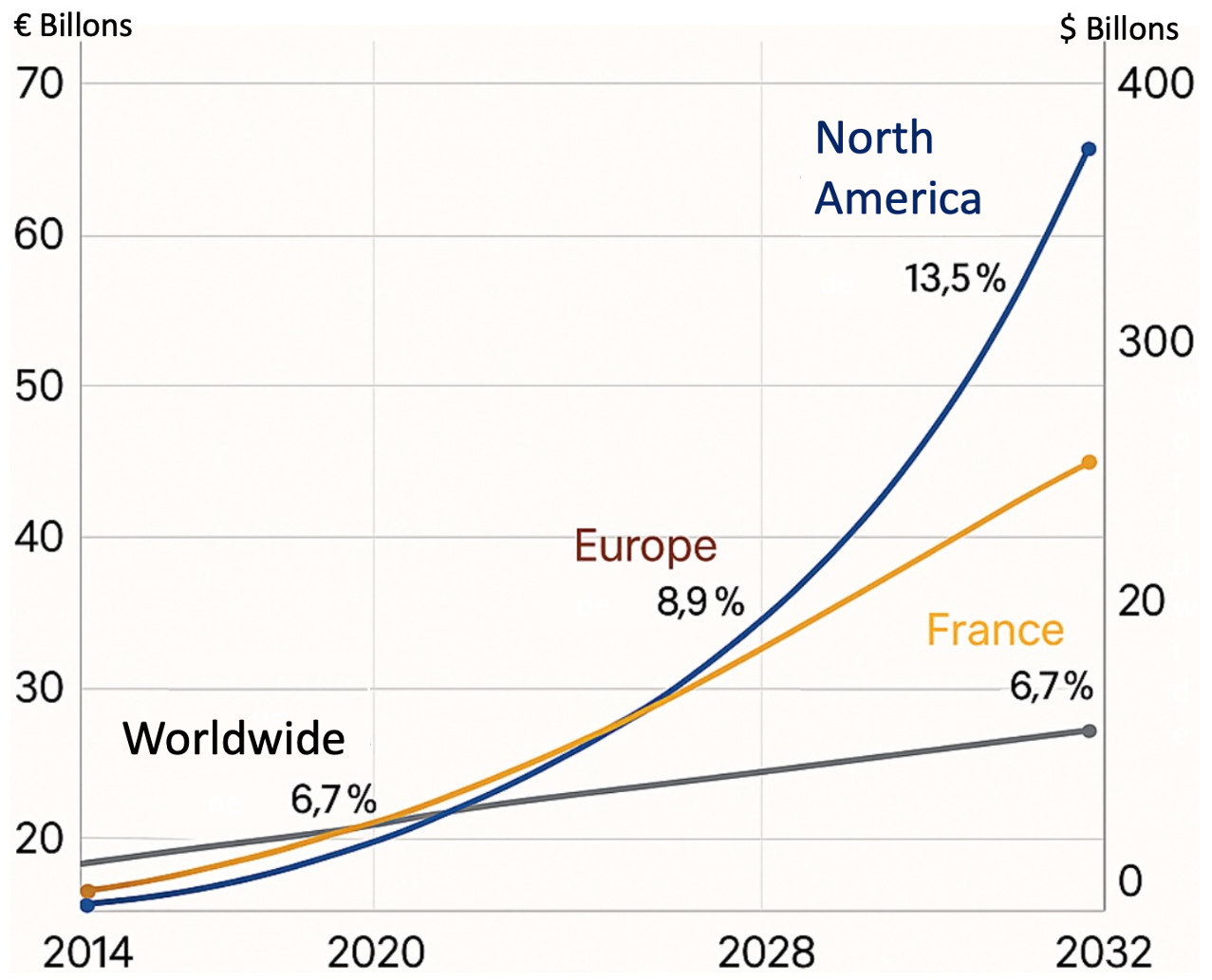
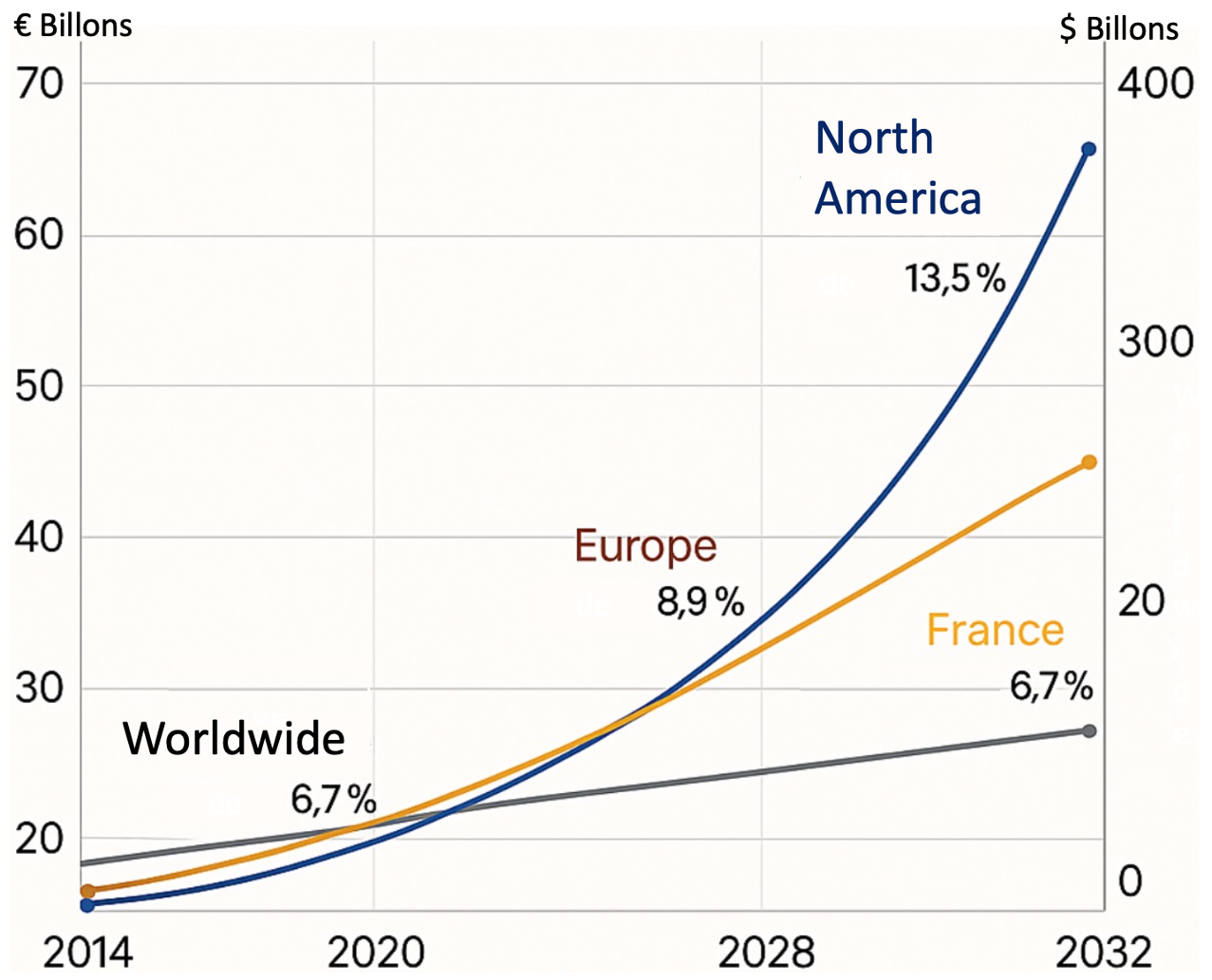
One of the highlights of the event was the mapping of the European CTV (Connected TV) market, which is now emerging as the new battleground for media companies. With an estimated value of over €30 billion by 2024, CTV is no longer a niche technology but a central pillar of the video advertising economy.

On a continental scale, France, Germany and Spain are now driving European growth, with rates well above those seen in the United States. France stands out in particular, with an average annual growth rate of 23% forecast between 2025 and 2032, ahead of the European average (EU4) of +14% and the US average of +11%. This acceleration reflects not only technological catch-up, but above all a new maturity among French players in the integration of new video formats, data logic and monetisation tools.

However, this boom comes with high expectations: it is no longer enough to increase inventory volumes; their perceived and measurable value must also be increased. As such, advertising agencies and platforms are now demanding highly operational responses. The priority is clear: to avoid marginalisation in the face of global platforms such as YouTube, Netflix and Prime Video, which capture the majority of attention… and investment.

It is in this context that seven levers have been identified as potential accelerators of future growth:

  1. One-stop streaming, capable of bringing together live, replay and premium content in a unified interface.

  2. Cross-environment navigation, via smarter metadata and deep link management.

  3. Consolidation between publishers, advertising agencies and operating systems, to offer unified and interoperable services.

  4. Hybrid measurement (audiences + attention + conversion), expected to be the missing link in monetisation.

  5. Activation of the entire funnel, from awareness to conversion in real time, within the same ecosystem.

  6. Opening up to new advertisers, particularly small and medium-sized businesses that have been under-exposed to CTV until now.

  7. The development of ‘off-site’ retailer media, with an extension of e-commerce logic into the television environment., with an extension of e-commerce logic into the television environment.

In summary, Europe has clearly recognised its potential in terms of CTV. However, this potential can only be realised if two challenges are overcome: capitalising on attention in an ultra-fragmented environment and creating fluid bridges between traditional media and digital activation strategies.

Agencies and Ad Sales Houses: a vital need for transformation

If one message resonated strongly throughout the morning, it was this: the historic promise of linear advertising – its firepower, its massive reach – is no longer enough on its own to justify investment. For the media agencies and advertising sales houses present, the new equation for advertising performance revolves around four pillars: visibility, engagement, credibility and transformation. And it is in this combination that value now lies.

Behind the rhetoric lies a shared realisation: the era of ‘campaign delivered = mission accomplished’ is over. Advertisers are constantly pushing for ROI. It is no longer enough to reach people; you have to convince them. And to convince them, you have to capture their attention, generate interaction and activate concrete signals of trust. Hence the growing interest in approaches that combine storytelling, social proof, calls to action and intelligent data.

In this context, artificial intelligence is emerging as a catalyst for transformation. The A.I. Lab workshops illustrated the diversity of creative uses:

  • The Blender Machine to intelligently combine the available data;

  • The Creative Expander to tailor assets to each audience segment;

  • The Idea-Powered Machine to generate new advertising formats based on unexpected insights;

  • The Prototyping Machine to rapidly industrialise testable creative concepts.

The ambition is clear: to move from a campaign-based approach to a platform-based approach, where every media contact becomes an opportunity for dialogue and conversion. This is precisely what CTV enables when it is designed as an interactive, measurable, personalised environment – rather than simply a digital extension of linear TV.

The most concrete illustration of this came from the “Shop with Max” initiative presented by Canal+ Brand Solutions. By allowing viewers to scan a QR code and purchase products seen in a programme directly, this approach merges content, inspiration and commerce. Television becomes a point of sale, and the screen a trigger for purchases.

For BuyTryShare, this dynamic is particularly relevant. Because ‘shopable’ is only truly effective when it is credible. By integrating authentic reviews – verified, certified, contextualised – into the media formats themselves, BuyTryShare offers a concrete response to the expectations expressed: high-quality social proof, integrated into a premium media ecosystem, serving advertising impact and conversion.

The need for transformation is therefore much more than a technological imperative: it is a reinvention of the very role of agencies and advertising networks, which are now expected to deliver concrete, measurable and justifiable value.

And what about advertisers in all this?

This is undoubtedly the most striking paradox of this event, which was entirely dedicated to the future of TV advertising: brands – despite being the most affected – were virtually absent. Apart from ProSol (Grand Frais), Swarovski and La Vie, no significant representative from the advertising world spoke, nor were they even mentioned as a driving force in the discussions presented.

This lack of representation is not merely anecdotal: it reveals a systemic imbalance. The entire ecosystem – advertising agencies, AdTechs, platforms – claims to ‘work for advertisers’, but often without them. Their voice is indirect, interpreted, sometimes fantasised, rarely embodied. Yet, in a context where every euro invested is under pressure, where every format must prove its value, this absence is worrying.

This is not just a matter of symbolic participation. What we felt was a lack of a clear vision of advertisers’ expectations, their operational constraints and their actual decision-making criteria. Which indicators do they prioritise? What level of simplification do they expect? What proof of impact do they require before testing an innovation? These are all questions that remain unanswered.

This void creates a major strategic opportunity for players such as BuyTryShare, whose proposition is based precisely on co-construction with brands. The PoC model promoted by the platform – simple, measurable, time-limited – is a direct response to this asymmetry. Because to generate value, we need to move away from top-down discourse and return to the essentials: the concrete business expectations of advertising decision-makers.

Involving brands early on, right from the design stage, offering them tangible proof of performance (increased brand recall, QR code click-through rates, net sentiment, etc.), and allowing them to compare the results with their traditional media plan: this is what BuyTryShare makes possible. And this is what is still lacking in a part of the advertising industry that is too focused on itself.

It is time to put advertisers back at the centre of media decisions, not as spectators but as co-pilots. The era of ‘solutions for brands without brands’ must give way to participatory, transparent approaches focused on ROI, customer experience and credibility.

Conclusion: reconnecting issues, refocusing priorities

The “Future of TV Ads” event highlighted a rapidly evolving advertising ecosystem that is technically advanced and strategically ambitious, but still too often self-centred. CTV is no longer a gamble: it is a reality. The technologies are there, the targeting capabilities exist, and the infrastructure is improving. And yet, the central question remains unanswered: what is the practical benefit of all this for brands?

Because innovation only makes sense if it is actionable, understandable and profitable for advertisers. They are the ones who decide, who arbitrate, who have to justify their investments. And today, they demand proof, not promises. Results, not just concepts.

BuyTryShare is part of this pragmatic approach. Our role is not to add another layer of complexity, but to facilitate the integration of social proof into existing media systems, without disrupting plans or creating heavy technical dependencies, but with a clear promise: more attention, more credibility, and more measurable impact.

The event reinforced our belief that there is strong demand for solutions like ours – solutions that create value at the intersection of media and customer testimonials. However, this value must be built with those who need it most: advertisers.

In 2025, it will no longer be enough to talk about transformation. We will have to prove that it is beneficial, that it works, that it converts.

BuyTryShare is ready.

BVoD: when TV becomes a streaming platform… to be monetised

The rise of BVoD: a response to new uses

Broadcaster Video on Demand (BVoD), or video on demand offered by traditional broadcasters, is experiencing significant growth worldwide, in response to changing consumption habits for audiovisual content.

The momentum of video-on-demand is underpinned by shifting consumer preferences towards content available on-demand and the diversification of business models, such as AVoD (ad-supported video, i.e. YouTube) and SVoD (subscription video-on-demand, i.e. Netflix, Disney+, Prime Video, HBO Max). 

These trends underline the growing importance of Video on Demand in the global media landscape, offering traditional broadcasters an opportunity to adapt to new consumer expectations and diversify their revenue streams with the development of their own BVoD offering (RTL+, TF1+, M6+, Joyn, VOYO, Peacock etc.). Let’s face it, the gradual and continuing erosion of advertising revenues from traditional TV channels – they are set to fall by 12% between 2020 and 2024 according to Statista – is leading publishers to redefine their strategies to capture an increasingly volatile audience. BVoD is emerging as a key solution for combining the power of premium TV content with the flexibility and targeting of video on demand.

Example: Example: In 2024, a local cosmetics brand in Central Europe successfully tested the BuyTryShare offer in its ads broadcast on the VOYO platform, the CME group’s BVoD, by integrating 5‘’ BuyTryShare spots after each main spot. The result: a QR Code conversion rate of 10.2% and a 22% uplift in brand awareness.

The importance of customer testimonials in the purchasing process

Today, 95% of consumers read online reviews before buying a product, and 49% of them trust them as much as a personal recommendation. These reviews have a direct influence on the online purchasing process and have become essential for advertisers looking to stand out from the crowd.

BuyTryShare is capitalising on this trend by integrating authentic customer reviews verified in accordance with the AFNOR NF522 standard. These reviews are broadcast in 5-second spots, accompanied by a QR Code that links to a dedicated page containing full testimonials.

According to a study by the Spiegel Research Center, products with customer reviews see their sales increase by 270% when they go from 0 to 1 review. This increase rises to 380% when the product goes from 0 to 100 reviews. What’s more, the study reveals that products with an average rating of between 4.2 and 4.5 stars are perceived as more credible than those with a perfect 5-star rating, reinforcing the notion of authenticity.

Example: During a campaign for a food brand in the Czech Republic, BuyTryShare integrated authentic customer reviews after traditional TV spots. The QR Code click-through rate reached 8.5%, generating 3,000 additional visits to the brand’s e-commerce site.

The BuyTryShare format: 5 seconds to grab attention

In a world where consumer attention is increasingly volatile, the 5-second format developed by BuyTryShare is perfectly in line with current marketing dynamics. According to a Microsoft study, the average attention span of an Internet user has fallen from 12 seconds in 2000 to just 8 seconds in 2015 – less than that of a goldfish. This means that brands have an extremely short window of opportunity to capture the interest of their audience.

The ContentBacon article highlights the crucial importance of those first few seconds: ‘You have five seconds to convince a consumer to stay on your page or engage with your content.’ In this context, the BuyTryShare format, with its 5-second advertising spots incorporating a QR Code and authentic customer reviews, offers an effective solution for attracting attention quickly.

Case in point: A campaign in Romania for a telecoms operator used the BuyTryShare 5’ format to promote a special offer. The integrated QR Code redirected to a registration page offering an exclusive discount. The result: 5,000 scans of the QR Code and a conversion rate of 14%.

There are several reasons for this success:

  • A simple message: in just 5 seconds, the spot conveys a clear, direct message, avoiding information overload.

  • Social proof: Incorporating authentic customer reviews adds credibility to the advertising message.

  • Interactivity: The QR Code provides an immediate gateway to additional content, encouraging consumer engagement.

In short, BuyTryShare’s 5-second format is the perfect answer to the demands of modern marketing, where every second counts to capture and hold the attention of an audience that is solicited from all sides.

Monetising advertising space for media publishers

For the advertising sales houses of major publishers, BuyTryShare is becoming a strategic lever for increasing their revenues while maximising the effectiveness of their advertising campaigns. Rather than suffering the erosion of TV revenues to the benefit of GAFAMs, BuyTryShare makes it possible to add value to the TV audience by transforming passive viewers into active participants through authentic and engaging testimonials.

By 2025, TV advertising revenues are set to fall by a further 7% in Western Europe. However, publishers incorporating innovative formats such as those offered by BuyTryShare can justify an average CPM increase of 15%.

Example: The CME media group integrated 5‘’ BuyTryShare spots for three non-competing brands, increasing the CPM by 20% and generating additional revenue of €150,000 over a 3-week period.

Conclusion: BuyTryShare, a revenue catalyst for BVoD… and the shelf.

In conclusion, at a time when traditional advertising is increasingly contested and revenue growth for broadcasters is weakening year on year, BuyTryShare offers an innovative solution for reinventing the TV advertising experience via BVoD… but also in the linear format! A short format, an engaging QR Code and credible reviews: the recipe for capturing viewers’ attention while reinforcing the credibility of advertising messages. For media publishers, it’s an opportunity to win back a shrinking advertising market and reconnect with a more attentive and receptive audience. For brands: an opportunity to transform television into an acquisition tool!

% Compound Annual Growth Rate (C) BuyTryShare 2025 – All rights reserved.

BVoD: when TV becomes a streaming platform… to be monetised

The rise of BVoD: a response to new uses

Broadcaster Video on Demand (BVoD), or video on demand offered by traditional broadcasters, is experiencing significant growth worldwide, in response to changing consumption habits for audiovisual content.

The momentum of video-on-demand is underpinned by shifting consumer preferences towards content available on-demand and the diversification of business models, such as AVoD (ad-supported video, i.e. YouTube) and SVoD (subscription video-on-demand, i.e. Netflix, Disney+, Prime Video, HBO Max). 

These trends underline the growing importance of Video on Demand in the global media landscape, offering traditional broadcasters an opportunity to adapt to new consumer expectations and diversify their revenue streams with the development of their own BVoD offering (RTL+, TF1+, M6+, Joyn, VOYO, Peacock etc.). Let’s face it, the gradual and continuing erosion of advertising revenues from traditional TV channels – they are set to fall by 12% between 2020 and 2024 according to Statista – is leading publishers to redefine their strategies to capture an increasingly volatile audience. BVoD is emerging as a key solution for combining the power of premium TV content with the flexibility and targeting of video on demand.

Example: Example: In 2024, a local cosmetics brand in Central Europe successfully tested the BuyTryShare offer in its ads broadcast on the VOYO platform, the CME group’s BVoD, by integrating 5‘’ BuyTryShare spots after each main spot. The result: a QR Code conversion rate of 10.2% and a 22% uplift in brand awareness.

The importance of customer testimonials in the purchasing process

Today, 95% of consumers read online reviews before buying a product, and 49% of them trust them as much as a personal recommendation. These reviews have a direct influence on the online purchasing process and have become essential for advertisers looking to stand out from the crowd.

BuyTryShare is capitalising on this trend by integrating authentic customer reviews verified in accordance with the AFNOR NF522 standard. These reviews are broadcast in 5-second spots, accompanied by a QR Code that links to a dedicated page containing full testimonials.

According to a study by the Spiegel Research Center, products with customer reviews see their sales increase by 270% when they go from 0 to 1 review. This increase rises to 380% when the product goes from 0 to 100 reviews. What’s more, the study reveals that products with an average rating of between 4.2 and 4.5 stars are perceived as more credible than those with a perfect 5-star rating, reinforcing the notion of authenticity.

Example: During a campaign for a food brand in the Czech Republic, BuyTryShare integrated authentic customer reviews after traditional TV spots. The QR Code click-through rate reached 8.5%, generating 3,000 additional visits to the brand’s e-commerce site.

The BuyTryShare format: 5 seconds to grab attention

In a world where consumer attention is increasingly volatile, the 5-second format developed by BuyTryShare is perfectly in line with current marketing dynamics. According to a Microsoft study, the average attention span of an Internet user has fallen from 12 seconds in 2000 to just 8 seconds in 2015 – less than that of a goldfish. This means that brands have an extremely short window of opportunity to capture the interest of their audience.

The ContentBacon article highlights the crucial importance of those first few seconds: ‘You have five seconds to convince a consumer to stay on your page or engage with your content.’ In this context, the BuyTryShare format, with its 5-second advertising spots incorporating a QR Code and authentic customer reviews, offers an effective solution for attracting attention quickly.

Case in point: A campaign in Romania for a telecoms operator used the BuyTryShare 5’ format to promote a special offer. The integrated QR Code redirected to a registration page offering an exclusive discount. The result: 5,000 scans of the QR Code and a conversion rate of 14%.

There are several reasons for this success:

  • A simple message: in just 5 seconds, the spot conveys a clear, direct message, avoiding information overload.

  • Social proof: Incorporating authentic customer reviews adds credibility to the advertising message.

  • Interactivity: The QR Code provides an immediate gateway to additional content, encouraging consumer engagement.

In short, BuyTryShare’s 5-second format is the perfect answer to the demands of modern marketing, where every second counts to capture and hold the attention of an audience that is solicited from all sides.

Monetising advertising space for media publishers

For the advertising sales houses of major publishers, BuyTryShare is becoming a strategic lever for increasing their revenues while maximising the effectiveness of their advertising campaigns. Rather than suffering the erosion of TV revenues to the benefit of GAFAMs, BuyTryShare makes it possible to add value to the TV audience by transforming passive viewers into active participants through authentic and engaging testimonials.

By 2025, TV advertising revenues are set to fall by a further 7% in Western Europe. However, publishers incorporating innovative formats such as those offered by BuyTryShare can justify an average CPM increase of 15%.

Example: The CME media group integrated 5‘’ BuyTryShare spots for three non-competing brands, increasing the CPM by 20% and generating additional revenue of €150,000 over a 3-week period.

Conclusion: BuyTryShare, a revenue catalyst for BVoD… and the shelf.

In conclusion, at a time when traditional advertising is increasingly contested and revenue growth for broadcasters is weakening year on year, BuyTryShare offers an innovative solution for reinventing the TV advertising experience via BVoD… but also in the linear format! A short format, an engaging QR Code and credible reviews: the recipe for capturing viewers’ attention while reinforcing the credibility of advertising messages. For media publishers, it’s an opportunity to win back a shrinking advertising market and reconnect with a more attentive and receptive audience. For brands: an opportunity to transform television into an acquisition tool!

% Compound Annual Growth Rate (C) BuyTryShare 2025 – All rights reserved.