

טרנספורמציית מדיה - BuyTryShare Skip to content

TF1 + M6 + Amazon: targeting is improving, but confidence is stagnating. And that’s where everything will be decided.

(c) Illustration Romain Doucelin/Hans Lucas via AFP – Les Echos

Targeting is improving, but so is scepticism

The TF1/M6/Amazon initiative is part of a clear industrial strategy: if audiences are fragmenting and switching to streaming, we will seek out data to stay in the race.

The idea: to win back market share from social media platforms and digital giants by offering advertisers more ‘engaged’ audiences that are closer to the moment of purchase and better segmented.

And the context proves them right… but only on part of the issue.

  • In June 2024, streaming already accounted for 40.3% of total time spent watching television, according to Nielsen’s The Gauge, an all-time record.

  • In May 2025, another symbolic shift occurred: streaming surpassed traditional television for the first time, accounting for 44.8% of TV usage compared to 44.2% for broadcast and cable combined.

  • At the same time, groups such as Warner Bros. and Paramount recorded double-digit declines in their traditional television revenues (–18% and –13% in certain quarters of 2024), confirming that linear television alone is no longer enough to finance the party.

In France and Europe, it’s the same story:

  • Digital has accounted for the majority of media investment in France since 2022, and is expected to reach nearly 69% of media spending by 2028.

  • In 2024, the French advertising market grew by +7.7%, driven by digital and the Olympic Games, while traditional TV saw its relative share erode in the mix.

  • At European level, digital advertising exceeded €118.9 billion in 2024, up 16% year-on-year, confirming the structural shift in budgets towards connected screens.

In this landscape, the reaction of television broadcasters is logical: if television is losing ground, it will be ‘rearmed’ with platform-style targeting. Hence the convergence of models:

  • Google has DV360

  • Meta has its ecosystème AEM / CAPI

  • The Trade Desk s’appuie sur ses graphes d’identité propriétaires

  • Amazon pousse son stack retail media jusque dans la TV connectée… et désormais chez TF1+ et M6+ avec Amazon Publisher Cloud

What changes with this partnership is that French television ad sales houses officially embrace the same paradigm: ‘more data’ to compensate for ‘less attention’ and ‘less linear revenue’.

Except that: Data cannot fix what it does not touch: the credibility of the message.

Yes, data targets better. Yes, it optimises GRPs and segments. Yes, it reassures CFOs with attractive dashboards.

But on the ground, on the public side, the figures tell a different story:

  • Nielsen shows that 64% of consumers actively take steps to avoid adverts on free, ad-supported video services (channel hopping, multitasking, etc.), and 59% say they are willing to pay to avoid adverts altogether.

  • At the same time, BrightLocal’s local consumer review survey reminds us that 98% of consumers read online reviews at least occasionally before choosing a local business, and that 76% read them ‘always’ or ‘regularly’.

  • The same family of studies shows that a majority of consumers lose confidence in a company when they see mostly negative reviews, a sign that the decision is no longer based on exposure, but on perceived evidence.

In other words: targeting has never been so sophisticated… and never has there been so much ad avoidance.

Reliable studies confirm the decline:

  • Nielsen’s Global Trust in Advertising report reminds us that recommendations from friends and family remain the most reliable channel, ahead of all forms of advertising. ‘Online consumer opinions’ come in just behind, far ahead of banners, mobile formats or other display formats.

Yes indeed :

  • Targeting is improving,

  • media piping is becoming increasingly sophisticated,

  • and combining viewing data with Amazon purchase signals allows for optimised planning.

But data does not make advertising more credible. It does not repair mistrust of brand messages. It does not, in itself, prove that the product delivers on its promises. And this is not a technical detail: it is the real divide in the market.

We have built very complex architectures to determine who to talk to, where and when. But we have done very little work on ‘why this person should believe what we are telling them’.

The current crisis is therefore not a crisis of targeting. It is a crisis of message legitimacy.

A useful partnership… but one that reinforces strategic dependence

Let’s be clear: for TF1 and M6, partnering with Amazon makes sense. Streaming platforms need to make their model profitable, SMEs are looking for simple and effective solutions, and the market demands responsible targeting.

The deal therefore ticks all the operational boxes at the moment.

But behind the immediate effectiveness lies an obvious strategic risk: by integrating Amazon signals, channels are becoming slightly more dependent on an ecosystem that has captured a large share of advertising value over the past decade.

A brief reminder of recent history:

  • Social media captured attention (time spent, short formats, engagement).

  • Amazon captured the conversion (retail media, internal search, real-time purchase data).

  • Television, weakened by the erosion of linear broadcasting, is now attempting to regain ground thanks to data.

This move makes sense, but it creates asymmetry: as soon as media value depends mainly on external data, whoever owns the data controls the value chain.

And in this partnership, it is not TF1 or M6 that owns the purchase data: it is Amazon. But if the history of digital technology has taught us one thing, it is this:

📌 Whoever controls the data controls the future dependence of the market.

But above all, this debate over ‘who has the best data?’ obscures a key point that platforms cannot address: proof that advertising works.

A clean room can bring signals closer together. It can refine segments. It can improve attribution models. But it cannot:

  • make a message more credible,

  • build trust,

  • incorporate certified evidence into an advertisement,

  • or clearly show on screen why a product is worth buying.

And it is precisely this third pillar — visible, verifiable evidence integrated into the media — that the market has still not resolved. In summary

✔️ Amazon helps television target its audience more effectively.

❌ But Amazon is not helping him to be more convincing

And it is this divide — relevance versus evidence — that will determine the winners of the next decade.

The advertising crisis is not a data crisis. It is a credibility crisis.

For ten years, all studies have been hammering home the same message:

  • Trust in TV adverts is declining year after year.

  • Attention spans are fragmented into micro-fragments, reducing the time available for persuasion.

  • Consumers systematically check reviews before buying (95% according to BrightLocal).

  • Branded messages are losing authority, often perceived as exaggerated or out of touch.

  • Above all, social proof now dominates brand messaging.

To put it plainly: the problem is not that adverts are poorly targeted… it is that people no longer believe them spontaneously.

Technology can optimise distribution, refine segments and enrich media plans. But it does not answer the essential question that crosses every household, every screen and every purchasing decision:

“Why should I believe what this brand tells me?”

In an environment saturated with messages (consumers are exposed to more than 15,000 commercial stimuli per day), persuasion no longer relies on repetition or algorithmic personalisation.

It is based on something simpler, but infinitely more powerful: evidence.

Human signals. Authentic. Verifiable. Understood in a second.

It is this combination — Attention + Trust — that truly triggers conversion. And certainly not the combination of Attention + Data, however sophisticated it may be.

The next frontier: integrating proof directly into advertising

The next battle will not be won on the field of targeting. It will be won on the field of visible trust.

The industry has tried everything:

  • behavioural triggers

  • creative AI

  • cross-device

  • DCO

  • attribution modelling

  • proprietary clean rooms

What it has not yet industrialised is certified proof in advertising creations. However:

  • 95% of people read reviews before buying

  • Reviews increase sales by an average of +18%

  • The presence of proof increases attention by +20 to +30%

  • QR codes drastically reduce the ‘last mile’ between exposure and action

  • And the ISO 20488/NF522 standard creates a credible framework for certified reviews

Television, newspapers and cinema have something that social media platforms will never have: the power of context. Add proof to that, and you regain what social media platforms have taken away from you: trust.

Targeting won’t save advertising. Trust will.

The TF1 + M6 + Amazon alliance is an important, long-awaited, strategic move. It modernises French television. It opens the doors to retail media. It extends performance.

But it does not address the core of the problem: the credibility deficit of advertising.

The next major market revolution will not come from a DSP, a clean room or an identity graph.

It will come from a simple, forgotten, almost banal principle: people believe other people. They no longer believe advertisements. The solution is there.

And the entire future value of advertising lies precisely at this intersection: where proof meets media.
The silent revolution in media and advertising

1. A structural decline in revenues for “traditional” media

Linear television, print media, and cinema have been experiencing a sustained erosion of advertising revenue for more than a decade. This is not a temporary blip, but a genuine structural transformation.

  • United States: The number of pay TV subscribers (cable, satellite) has been declining for nine consecutive years. According to S&P Global, this trend will continue, with several million fewer households each year, leading to a mechanical contraction of the associated advertising market.

  • World: Caretta Research estimates that broadcast television and pay TV will lose $42 billion in revenue between 2024 and 2029. This is one of the fastest declines ever recorded in the history of audiovisual media.

  • Australia: Advertising revenues for free-to-air television fell by 8.1% in 2024, representing a loss of more than $250 million in a single year. This decline has been partially offset by the rise of BVoD platforms, but it reveals a lasting shift in investment.

For more than a decade, the print media has been experiencing a structural erosion of its advertising revenues, which cannot be offset by digital growth alone.

  • In France, advertising revenue for the press declined by an average of 5.4% per year between 2012 and 2022. According to BUMP (S1-2025), total press revenue (print + digital) stands at €623 million, down 7.7% from the previous year. Projections from the Ministry of Culture (DGMIC/ARCOM) estimate that the press could lose a third of its advertising value by 2030 if current trends continue.

  • In Europe, the situation is no better. In Germany, advertising revenues for print media fell from €6.9 billion in 2010 to €3.85 billion in 2016, a drop of nearly 45% in six years.

  • Globally, WARC Media forecasts a 33% decline in advertising spending in the press (print + digital) between 2019 and 2025.

This rapid deterioration is linked to a dual dynamic:

  • The decline in print circulation and traditional readership, leading to a loss of appeal for advertisers.

  • The shift of investment towards digital (search, social media, online video), where the press struggles to compete with the targeting power and critical mass of GAFAM platforms.

👉 In short: the press, long a pillar of advertising and guarantor of trust with its readers, is seeing its advertising revenues collapse structurally. Publishers are trying to reinvent themselves with paywalls, digital subscriptions, and sponsored content, but profitability remains fragile and digital revenues are not compensating for the decline in print. The conclusion is clear: the historical power of the media is no longer enough to guarantee sustainable revenues. Groups must find new sources of value to offset this structural decline.

Long considered a premium medium for advertising—captive, immersive, emotional—cinema is going through a period of turbulence that is undermining its revenues.

  • Declining attendance: in France, the number of admissions fell from 200 million in 2019 to 181 million in 2023 (CNC), a decline of nearly 10% in four years. In several European markets, post-COVID recovery remains below pre-pandemic levels.

  • Advertising revenues under pressure: according to Kantar, cinema advertising revenues in France fell by nearly 20% between 2019 and 2022. The recovery is partial, but unstable attendance figures are making advertisers cautious.

  • Platform competition: Netflix, Amazon Prime Video, Disney+, and others are not only capturing viewers’ screen time, but also a growing share of advertising budgets through their AVoD offerings and partnerships.

  • Increased costs for operators: energy, technological upgrades (IMAX, 4DX, LED screens), multiplex maintenance… all of these expenses weigh heavily on profitability.

Faced with these challenges, players are consolidating. The latest example: in 2025, Canal+ began its takeover of the UGC network, with an initial stake of 34% that could evolve into a complete takeover by 2028. UGC, an iconic operator (55 multiplexes in France and Belgium), represents a strategic asset for Canal+, which is seeking to control the entire value chain—from production to distribution, including theater operations.

👉 This acquisition illustrates a dual trend: on the one hand, the structural fragility of the cinema advertising model, and on the other, the desire of large groups to protect themselves by vertically integrating the industry. Cinema retains a unique emotional appeal, but its advertising revenues remain volatile, concentrated on a few blockbusters, and exposed to competition from digital media.

2. Media efforts to reinvent themselves

Faced with structural erosion of their revenues, major media groups are deploying multiple strategies to stem the loss of audiences and restore their appeal to advertisers.

  • France/Europe: Last year, TF1 successfully launched its free TF1+ platform, enhanced with premium content, catch-up features, and personalized recommendations. The ambition is clear: to move closer to the standards set by Netflix and Disney+, while capitalizing on video advertising. M6+ and France.tv are following the same logic, with modernized interfaces and enriched catalogs, to retain an audience that now consumes content massively on demand.

  • Australia: the shift is already visible in the figures. While linear television lost more than 8% of its advertising revenue in 2024, BVoD jumped 12.7% to $441 million. Advertisers favor these hybrid platforms, which are perceived as both high-quality (due to their proximity to traditional channels) and capable of offering digital targeting.

  • United Kingdom/Germany: The BBC with iPlayer, ITV with ITVX, and ZDF and ProSiebenSat.1 via Joyn are investing heavily in AVoD (free with advertising) offerings and hybrid models combining subscription and advertising. These services are positioning themselves as credible local alternatives to the American giants, with a dual promise: to maintain cultural ties with the national audience and to capture advertising budgets that are migrating to digital.

  • United States: Traditional networks (NBC, CBS, Disney via Hulu/Disney+) are increasing their AVoD offerings to compensate for the mass exodus of cable subscribers. These platforms enable them to maintain their advertising base while diversifying their revenue streams through low-cost subscriptions. Disney+, for example, is actively promoting its “ad-supported” offering in the United States and Europe, seeing premium digital advertising as a major growth driver.

  • Consolidation as a strategic response: beyond digital transformation, media groups are seeking to strengthen themselves through mergers and acquisitions. Italy’s Mediaset acquired Germany’s ProSiebenSat.1 to create a European champion capable of competing with global platforms. RTL acquired Comcast’s Sky operations in the DACH region to expand its footprint, while the TF1/M6 merger, which was temporarily blocked, remains a regularly discussed scenario in the face of market pressure. And as Philippe Bailly of NPA Conseil, pointed out, Canal+’s acquisition of MultiChoice could bring the group’s total number of subscribers to more than 65 million in sub-Saharan Africa and the countries where its subsidiaries operate alone. The deal comes at a time when MultiChoice has around 21.7 million subscribers and Canal+ already has 26.4 million in more than 50 countries—this strategic alliance is a major lever for achieving its international objectives.

👉 These efforts reflect a clear desire to retain fragmented audiences, diversify revenue streams, and gain critical mass in the face of global platforms. But one issue remains unresolved: consumer trust. New platforms improve the content experience and distribution, and mergers create stronger champions, but none of these strategies address the credibility deficit in advertising. As long as less than one in two consumers say they trust advertising, the effectiveness of campaigns will remain limited, regardless of how powerful the players are.

3. Consumer mistrust of advertising

Despite a slight uptick in confidence in 2024, advertising continues to be viewed with mistrust and skepticism. The latest edition of the Advertising Association’s Trust Tracker reveals that in the UK, only 39% of people trust advertising, up from 36% the previous year. This average masks a deep generational divide: 18-34 year olds are nearly three times more likely to trust advertising than those over 55, and 51% of young people say they trust online advertising, compared to only 14% of seniors. Television and cinema remain the most trusted advertising media (43% of respondents).

In France, mistrust is even more pronounced. According to a Viavoice study published in 2024 for the Club des Annonceurs, 55% of French people have a negative image of advertising, compared to 39% who have a positive one. Young people (aged 18-24) are more conciliatory (62% positive opinions), but perceptions deteriorate significantly with age.

This mistrust translates into a marked preference for peer recommendations. A Nielsen poll cited by Business News Daily shows that 92% of consumers trust recommendations from friends and family, while less than half consider television, magazine, or newspaper advertisements to be credible. Online customer reviews also enjoy a high level of credibility: 70% of those surveyed say they trust them. However, trust in reviews is not unshakeable: BrightLocal’s Local Consumer Review Survey 2025 report highlights that only 42% of consumers place as much credit in online reviews as they do in recommendations from friends and family, down from 79% in 2020.

These figures highlight a “trust gap”: despite creative efforts, less than one in two consumers still believes advertising messages. This mistrust fuels the search for alternatives that combine media power and authenticity. BuyTryShare fits perfectly into this logic: by integrating verified customer reviews (compliant with ISO 20488/NF522 standards and validated by the ARPP) into TV, cinema, and press ads, the initiative combines the reach and creativity of traditional media with the credibility of consumer evidence. The aim is to restore meaning and value to advertising while offering advertising agencies a new source of revenue, in a context where trust is becoming a key performance criterion.

4. Rebuilding trust, rebuilding value: why BuyTryShare is vital for the changing media landscape

Advertising is going through a period of turbulence. Linear television audiences are falling, press revenues are eroding year after year, cinema attendance remains unstable, and advertisers are more cautious than ever. At the same time, consumer confidence in advertising has never been so fragile: less than one in two people consider the messages they receive to be credible.

It is precisely this divide that BuyTryShare was designed to address.

  • Its purpose: to restore credibility to advertising and offer advertising sales houses new growth drivers.

  • How: by injecting verified consumer reviews (ISO 20488/NF522, ARPP validation) into advertisements (TV, cinema, press) in an ultra-short and impactful format (5 seconds with QR code).

  • The results: the first PoCs are already showing measurable gains: +25% attention and +15% incremental sales in categories such as agri-food.

But BuyTryShare is more than just a creative innovation. It is a systemic response to a critical moment for the media. As Thomas Jamet (founder of the 7Kids agency, part of the Labelium group) points out, the media is “undergoing change”: 15-34 year olds spend half as much time watching television as they did ten years ago, usage is shifting towards streaming and mobile, and the advertising value of traditional inventories is automatically eroding.

In this context:

  • Advertisers are demanding greater ROI and tangible proof of advertising effectiveness.

  • Advertising sales houses must find new business models to compensate for the structural decline in their revenues.

  • Consumers are demanding greater transparency and credibility in the messages they receive.

BuyTryShare positions itself as the European solution to this triple challenge. By combining the emotional and creative power of traditional media with authentic consumer proof, it transforms advertising into a vehicle for trust and restores a differentiating value to Ad Sales Houses’ inventories.

In concrete terms, BuyTryShare allows you to:

  • advertisers to secure their investments through more credible and effective campaigns,

  • media outlets to increase monetization of their advertising space with a unique offering that stands out from GAFAM,

  • consumers to reconnect with trustworthy advertising messages based on the real experiences of other customers.

🚀 BuyTryShare embodies a credible and sustainable European alternative: a lever to rebuild trust and recreate value at a time when the media needs it most.

Repairing advertising: when customer reviews and QR codes restore meaning to media attention

1. Customer reviews: stronger trust than advertising

Customer reviews are no longer incidental: they have become the norm that consumers systematically consult before making a purchase. In a saturated media landscape, where traditional advertising struggles to stand out, reviews appear to be a source of perceived truth that is direct and credible.

Documented and quantified trust

  • In 2025, 93% of consumers read online reviews before purchasing, and more than 53% trust them as much as personal recommendations (DemandSage). In other words, a stranger’s opinion online today carries as much weight as that of a close friend.

  • Among millennials, the ultra-connected generation, 68% trust online reviews more than TV advertising (34%) (Impact Group Marketing). This generational gap shows how the codes of trust have shifted.

  • More broadly, 78% of people trust reviews more than ads, while only 4% still consider advertising messages credible (Channel Signal)..

This distrust toward advertising explains the emergence of a “proof-based” marketing model: a credible message today must rely on real consumer experiences.

Direct impact on conversion

Trust is not just about image; it translates directly into sales.

  • 92% of consumers trust recommendations from friends and family more than any form of advertising, and 70% trust online reviews (Business News Daily).

  • According to Investopedia, reviews can boost conversion rates by up to +380% for high-ticket products, compared to a campaign without social proof (Investopedia). The more the purchase is engaging, the more reviews reassure and trigger buying decisions.

  • A Trustpilot study shows that adding the average rating and number of reviews in an ad can increase click-through rates by 10x compared to a message without social proof (Trustpilot).

Why reviews outperform advertising?

Traditional advertising aims to convince. Reviews, instead, reassure. It’s the difference between a promise and proof. In an era where consumers are over-informed and skeptical, they prefer to rely on peer experience rather than brand rhetoric.

Furthermore, social psychology has long demonstrated the effect of “social proof” (Cialdini, 1984): when an individual is uncertain, they rely on the behaviors or opinions of others to make a decision. Platforms such as Amazon and TripAdvisor have made this their fuel, and now this reflex is also becoming prevalent in audiovisual advertising.

Conclusion: Authentic customer reviews are not just a marketing supplement; they surpass traditional advertising messages in terms of credibility, attention, and conversion power. Today, they represent essential social proof.

2. QR codes on Connected TV: from passive to reactive

For decades, TV advertising has been a “one-way” medium: a top-down message with no real interaction. Viewers watched, sometimes remembered, but rarely acted immediately. Connected TV (CTV) and the integration of QR codes are radically changing this paradigm. They transform a passive screen into a direct point of contact, where every ad can trigger measurable action.

Massive adoption and widespread understanding

The QR code, once seen as a gimmick, is now a universal reflex.

  • 95% of consumers know how to scan a QR code, and 50% are willing to do so if the ad is relevant (NextTV).

  • The study highlights an important fact: heavy streamers, who consume the most online content, are almost twice as likely to scan as occasional viewers. In other words, QR codes resonate most with hard-to-reach audiences: young, digital-first, and demanding.

A bridge between exposure and action

What sets QR codes apart is their ability to reduce friction between the moment an advertisement is seen and the moment action is taken. All you need is a smartphone at your fingertips—which is the case for 9 out of 10 viewers in front of their screens—to extend the experience.

  • According to Sharethrough, adding a dynamic QR code to a CTV ad increases attention by an average of 12%. This is a significant increase in a world where every point of memorization is hard to come by.

  • Beyond attention, the QR code becomes a natural CTA (Call To Action): it doesn’t require users to remember a number, type in a URL, or wait until later. It allows them to act “in the moment.”

New, measurable, and actionable data

For advertisers and ad sales houses alike, QR codes also represent a powerful data marketing tool.

  • Bitly has shown that QR codes embedded in CTV ads provide real-time engagement data: number of scans, geolocation, peak interaction times, segmentation by device, etc. (Bitly).

  • This information transforms a TV campaign, historically driven by audience estimates, into a campaign that can be managed based on actual behavior. We are no longer just measuring GRPs (gross rating points), but actionable metrics.

Proof of effectiveness in terms of ROI

The Simulmedia blog emphasizes that one of the biggest advantages of QR codes in connected TV is their ability to generate measurable interactions and thus optimize advertising ROI (Simulmedia). In a world where budgetary pressure is high, each scan becomes tangible proof that the audience has not only been exposed, but has also taken active steps.

Better still, QR codes make it possible to attribute a portion of sales to television campaigns, which have historically been difficult to measure. Whereas traditional television suffered from a lack of traceability, QR codes provide a direct chain of evidence between exposure, action, and conversion. between exposure, action, and conversion.

Complementarity with social proof

Where BuyTryShare offers a decisive advantage is in its combination of authentic customer reviews and integrated QR codes.

  • The review reinforces the credibility of the message and captures attention.

  • The QR code transforms this attention into immediate action.

  • The whole creates a mechanism where advertising no longer just makes promises, but demonstrates and invites verification.

A concrete example: a 20-second commercial for a food product can be extended with a 5-second add-on displaying an average rating (4.6/5 based on 250 reviews) and a QR code. With one click, viewers can access the page with all the reviews or take advantage of a special promotion. In this scenario, the advertisement becomes credible, engaging, and traceable.

Towards interactive and responsible television advertising

This change also reflects consumer expectations: to be more active in their consumption of advertising, and no longer be subjected to a one-sided message.

  • QR codes allow additional content (e.g., product tests, comparisons, recipes, tutorials) to be offered without extending the length of the commercial.

  • They contribute to an ecology of attention by focusing the message on those who choose to go further, rather than imposing more repetition on ever

Conclusion: Today, QR codes are the ideal gateway between mass media and individual action. They breathe new life into connected TV advertising, making it traceable, interactive, engaging, and measurable. Combined with authentic customer reviews, they transform advertising from a broadcast model to a model based on proof and action.

3. When social proof meets interactivity: the winning mix

The true potential of modern advertising lies in the link between credibility and action. Taken individually, neither a traditional TV commercial, nor a QR code, nor a customer review has the power to profoundly transform the advertising experience. However, when these three elements are combined, they create a synergy that increases effectiveness tenfold.

1) Social proof: authenticity at the heart of the message

A real, certified review attributed to a genuine consumer immediately captures attention. In a world saturated with advertising messages, the voice of a peer stands out for its perceived sincerity. Seeing a rating of 4.6/5 based on 1,200 reviews inspires far more confidence than a brand slogan. This social proof acts as a credibility filter: it reassures and strengthens the emotional impact of the message.

2) Immediate call to action: turning attention into interaction

The QR code extends this moment of trust. By scanning it, viewers can read all the reviews, get an exclusive offer, or access a product page. Unlike traditional calls to action (URLs to remember, phone numbers to call), QR codes offer instant, seamless, and measurable interaction. The advertising message doesn’t end when the commercial ends: it opens up a personalized digital experience.

3) Traceability: actionable data for advertisers

Every scan is proof of engagement. Unlike GRPs, which measure theoretical exposure, QR codes provide concrete data: number of scans, peak times of engagement, user profiles, conversion rates… These indicators transform television into a performance-driven medium, offering advertisers insights previously reserved for digital channels

Advertising that regains its value

By combining these three levers, advertising regains its true purpose: not to interrupt, but to inform, reassure, and engage. The viewer no longer suffers from a one-way message; instead, they receive proof, choose to interact, and can go further based on their own needs.

Conclusion: this alliance restores value to advertising. It becomes engaging, memorable, and — above all — measurable, both for advertisers and for Ad Sales Houses.

4. Why BuyTryShare is the essential solution

In today’s saturated advertising landscape, BuyTryShare provides clear answers to all three key players: media owners, advertisers, and consumers. Its role is not just to introduce a new format, but to realign interests that often appeared divergent.

In a saturated advertising market, BuyTryShare provides a clear solution for three stakeholders: ad sales houses, advertisers (and their agencies), and consumers. Its role is not only to introduce a new format, but also to reconcile interests that too often seemed divergent.

For advertising sales houses: a lever for revenue and differentiation

Brands face a double challenge: capturing fragmented attention and regaining lost trust. BuyTryShare addresses both of these issues by offering a format that anchors the message in social proof (authentic reviews) and encourages immediate action (QR code). Advertisers thus benefit from concrete and measurable feedback: scans, intentions, conversions. Where traditional TV advertising lacks traceability, BuyTryShare introduces tangible KPIs that are compatible with modern ROI logic..

For advertisers (and their agencies): restoring trust and measuring effectiveness

Brands struggle with fragmented attention and eroded trust. BuyTryShare addresses both challenges by embedding authentic social proof and enabling instant interaction. Advertisers finally gain real KPIs (scans, intent, conversions), making TV measurable and ROI-driven.

For consumers: a more credible, respectful ad experience

Viewers are increasingly skeptical of advertising messages. By incorporating their own authenticated reviews into its communications, BuyTryShare values them and gives them an active role again. It is no longer top-down advertising, but advertising that gives consumers a voice and invites them to act transparently. This change in approach restores meaning to the relationship between brands and audiences.age.

In practice: the WHY of BuyTryShare

BuyTryShare’s DNA is to create a bridge between social proof, media, and interactivity. For advertising sales houses, it is an additional monetization lever and a differentiating innovation. For advertisers and their agencies, it is a more credible and effective way to capture attention. For consumers, it is meaningful, useful, and interactive advertising.

Advertising is undergoing a silent but profound crisis. Traditional commercials are struggling to hold viewers’ attention, and consumer confidence in brand messaging is eroding year after year. At the same time, digital platforms are capturing huge advertising budgets, but without offering local advertising sales houses any sustainable prospects for growth.

Conclusion: reinventing advertising through trust and action

Advertising faces a silent crisis. Spots struggle to capture attention, and consumer trust in brands declines. At the same time, digital giants siphon ad budgets, leaving local media struggling.

The facts are clear:

  • Customer reviews outperform ads in credibility and directly influence purchases.

  • QR codes transform TV from passive to interactive, traceable, and action-driven.

  • The combination of the two—social proof + interactivity—restores value to advertising by making it useful, engaging, and measurable.

This is exactly where BuyTryShare delivers value.

👉 For Ad Sales Houses: It is a source of additional revenue and a tool for differentiation from the digital giants.

👉 For advertisers and their agencies, this guarantees more credible and effective campaigns, backed by concrete KPIs.

👉 For consumers, this means more transparent advertising that values their voice and gives them back the power to participate.

The future of advertising lies not in volume, but in value. It’s not about shouting louder, but speaking more accurately. Not about promising more, but proving better.

That’s the promise of BuyTryShare: putting trust and attention back at the heart of advertising, and creating a win-win situation for everyone.

(C) QR-Code Tiger (https://www.qrcode-tiger.com)

How authentic customer reviews transform TV advertising into a conversion tool

Traditional media forced to reinvent themselves

Faced with the growing dominance of GAFAM in the advertising market, traditional media outlets no longer have the luxury of remaining static. They are forced to reposition themselves not only in terms of content, but above all in terms of business models. Two recent developments illustrate this profound transformation:

  • The TF1/Netflix agreement, which allows the French free-to-air television giant to distribute its content via set-top boxes alongside the American platform, shows how much traditional channels now have to contend with their former digital rivals.

  • The acquisition of Sky Deutschland by RTL, confirmed at the end of June 2025, is further proof of this. By taking over Sky’s activities in Germany, Austria, Switzerland, and Luxembourg from Comcast, the RTL Group (a subsidiary of Bertelsmann) is affirming its strategic desire to build a European advertising battleground against international platforms by consolidating television assets and gaining greater control over the value chain.

But this transformation must also involve advertising sales houses. BuyTryShare positions itself as a natural ally of advertising sales houses, providing them with a unique SaaS solution designed to diversify their revenues, strengthen advertising attention, and offer advertisers more credible and actionable formats through the integration of authentic customer reviews into traditional media. This approach is no longer just a matter of technological innovation: it is a strategic response to an urgent need for transformation. Especially since BuyTryShare benefits from the active support of TERRITORY Influence, another subsidiary of the Bertelsmann group, which is involved in the industrialization of the model in Europe via its micro-influence and review collection platforms (trnd). This is a logical convergence within a group that is now structuring its response to GAFAM on all fronts—content, distribution, and monetization.

From advertising to live social proof

The BuyTryShare solution is based on a mechanism that is as simple as it is effective: letting consumers themselves speak at the heart of the advertising. It is based on three key steps:

  1. Recruit real consumers who have been pre-qualified via proof of purchase.

  2. Collect their reviews, which are authentic and moderated to ensure their sincerity and traceability.

  3. Incorporate one of these reviews —a rating out of 5 and a short quote— into a 5-second commercial broadcast immediately after the traditional TV commercial.

This short format, called an “ad-on,” is designed to capture attention and transform a top-down message into instant social proof. It is systematically enriched with a QR code or a short link, redirecting to a dedicated page that collects all the reviews—sometimes even to an e-commerce site or a request form.

This system, which might have seemed innovative a few years ago, is now fully integrated into the habits of consumers and advertising sales houses.

In France, several recent initiatives confirm the widespread adoption of QR codes as a gateway between content and conversion:

  • TF1 PUB has announced the arrival in fall 2025 of shoppable ads incorporating QR codes directly into advertising screens to enable immediate purchase of a product seen on screen.

  • Canal Plus Brand Solutions is going even further with its MyCanal platform, testing a system where, during the broadcast of HBO Max programs, contextual QR codes appear on screen to offer a product or service directly related to the content being watched.

BuyTryShare is fully in line with this approach: it is no longer just about showing, but about proving and activating. The QR code becomes the interface between the emotion of advertising, the trust of customer testimonials, and action (click, purchase, lead). A three-dimensional advertisement, so to speak: informative, social, and transactional..

Result: a medium with double impact

In an environment where every dollar invested must demonstrate its profitability, BuyTryShare does not just appeal with its promise—it measures it. Unlike traditional advertising, whose effects are sometimes unclear or delayed, the BuyTryShare system is based on a series of concrete indicators that are monitored in real time. This hybrid model combines:

  • the emotion and memorability of TV advertising;

  • the reassurance and trust inspired by customer testimonials.

This combination of memorization and reassurance has a threefold effect:

  1. More attention: the disruptive format (addition of customer testimonial) captures the viewer’s attention more effectively.

  2. More trust: certified testimonials create social proof that is difficult to ignore.

  3. More conversions: the QR code accelerates the transition from attention to action.

The BuyTryShare approach thus responds to a strong market demand: finding the balance between performance and credibility, between advertising creativity and transparency of results. This makes it a tool that is perfectly aligned with the requirements of modern marketing departments, which must innovate, reassure their management, and prove the effectiveness of each campaign. With BuyTryShare, advertising ceases to be a gamble—it becomes a traceable investment.

A measurable and verifiable ROI

BuyTryShare campaigns enable you to accurately measure the impact of advertising.

In addition to the measured indicators—click-through rate, conversion rate, uplift in brand awareness or purchase intent, number of leads generated, NPS (Net Promoter Score), average product rating, repurchase rate, or customer lifetime value—are complemented by additional metrics specific to advertising sales houses, such as ad impressions, viewing time, aided recall rate, average post-exposure basket size, bounce rate, and landing page engagement rate.

An ideal platform for convincing marketing departments seeking concrete results without sacrificing creativity.

Conclusion: letting your customers speak for themselves is better than speaking for them.

In a world saturated with promises, brands must learn to trust their users. BuyTryShare transforms every advertisement into amplified social proof. The message is no longer “buy our product,” but “listen to those who have already done so.”

What if the future of TV advertising depended on the voice of customers—and a new lease of life for advertising agencies seeking impact and sustainable revenue?

2025: The year when TV advertising reinvents itself thanks to customer reviews

1. A changing context: the end of blind trust

Since the pandemic, distrust of institutions, advertising and even influencers has grown steadily. The advertising market is going through an unprecedented crisis of confidence. In 2024, the Edelman Trust Barometer revealed that only 41% of French people trust brands. Conversely, customer reviews are now considered the most reliable source of information in 89% of cases (source: BrightLocal 2023).

In this climate of mistrust, ‘traditional’ advertising – monologue, scripted, one-way – is no longer enough. Consumers want proof, not promises.

At the same time, the scheduled disappearance of third-party cookies (already effective on Safari and Firefox, and in progress on Chrome) is accentuating the need for reliable alternatives for building customer relationships.

Examples: In 2023, Decathlon included customer reviews in its YouTube Ads videos, which led to an 18% increase in the completion rate according to their Nielsen report. Amazon, meanwhile, systematically uses extracts from verified reviews in its product emails and in certain Amazon Prime campaigns. The result: a click-through rate up to x2.3 higher than a version without reviews.

2. Social proof: the number one driver of attention and conversion

Social proof is a well-documented cognitive bias: individuals rely on the behaviour or opinion of the majority to make a decision, especially in situations of uncertainty. It has become a strategic pillar in marketing. It operates on three levels:

  • Attract attention: a message from a peer is perceived as more credible and catches the eye more quickly.

  • Create trust: the perception of veracity is reinforced when the message is lived, sincere and not embodied by the brand.

  • Convert: when faced with two similar products, the one with the best reviews is bought 3 times more often (source: Spiegel Research Center, 2023).

🔍 Key figures:

  • 72% of consumers will not make a purchase without reading a customer review.

  • The Spiegel Research Center (Northwestern University) has shown that a product with at least 5 positive reviews is 4 times more likely to be purchased than a product without any reviews.

  • A Bazaarvoice study (2023) highlights that integrating customer testimonials into marketing assets increases conversions by an average of 45%, and that products with 11 to 20 reviews have the highest conversion rate.

  • According to Think with Google, ads incorporating UGC (User Generated Content) content attract 2 times more attention than traditional formats.

  • Including a review in marketing content increases the recall rate by 38% (BuyTryShare internal study, 2024).

Case in point: L’Oréal Paris ran a TV campaign incorporating verified customer reviews on a new foundation. The result: +38% purchase intention measured via Kantar, and a 3-fold increase in engagement on social networks.

3. TV remains powerful. But it needs proof

TV remains a behemoth. In France, despite the rise of digital, 43.1 million people watch television every day (Médiamétrie, 2024). Its emotional power and ability to capture attention ‘full screen’ are unrivalled. Linear television and BVoD continue to have an unrivalled impact. However, the recurring criticism from advertisers remains the same: TV has an impact (particularly at the top of the funnel), but it is still difficult to measure what it actually generates in terms of sales. Marketing decision-makers are demanding formats that are more activatable and better traceable.

With the arrival of BVoD (Broadcast Video On Demand) and the rise of smart TVs, viewing habits are changing. Viewers want to interact, choose and act. So we need to transform a mass medium into a channel that can be activated and tracked.

The Wall Street Journal study of March 2024 highlights that 72% of marketing directors questioned want to ‘make their TV campaigns more measurable, more personalised and more credible’, in particular by integrating digital indicators (clicks, scans, interactions, etc.).

📺 Case study: In 2023, Kellogg’s UK integrated a spot with a QR code linking to video customer reviews on the new granola. Result: +24% scans, +18% partner shop sales (source: Campaign UK, Nov 2023).

Case in point: Procter & Gamble tested a ‘QR TV’ format in the United States (NBC), encouraging viewers to scan to read user testimonials. The result: +30% engagement compared with a conventional ad.

4. BuyTryShare: the solution that links the emotion of TV with the credibility of testimonials

Combining the power of television with the trust of word-of-mouth, BuyTryShare is a technological solution designed to take advantage of this transformation and make TV advertising measurable, credible and activatable. It works by integrating authentic consumer reviews, collected via qualified panels or partner review platforms, into a short, impactful and interactive format:

  • 5-second format with a testimonial + trackable QR code.

  • Compatible with all advertising sales houses and broadcasting platforms (linear TV, replay, BVoD, etc.).

  • Generation of concrete KPIs: scans, click-through rates, drive-to-web visits, recall rates, awareness uplift.

  • Guaranteed authenticity and compliance (ARPP in France, RGPD alignment, transparency of reviews).

🎯 In a nutshell: BuyTryShare transforms a €100,000 advertising spot into a measurable, credible and shareable device, where a traditional spot stops at mere exposure.

Case in point: A yoghurt brand launches a BuyTryShare campaign in BVOD. The advert shows a customer saying ‘I only take this one now: it’s more natural and easier to digest’. The QR code links to a comparative mini-site. Result: +22% increase in site traffic over the duration of the campaign, measured via UTM/GA4.

5. What if 2025 became the year when TV advertising became ‘human’?

We are entering a new era: that of TV augmented by social proof. The brands that succeed in 2025 will be those that succeed in embodying their message through real consumers.

Traditional media need a new advertising grammar. BuyTryShare provides that solution:

  • Less marketing claims,

  • more experience and authenticity,

  • And an unprecedented synergy between power (television) and trust (customer reviews).

BuyTryShare is not just another format: it’s a new advertising language that combines the emotional power of TV with the credibility of digital word-of-mouth. In a tense economic climate where every euro invested has to prove its effectiveness, the addition of a customer review becomes a performance multiplier: attention, engagement, conversion

Conclusion: By integrating recommendation into the advertising format, BuyTryShare helps brands to capture attention, generate sales and strengthen loyalty… at a time when every euro invested must prove its effectiveness. Brands that adopt this strategic lever today will have a competitive advantage in 2025. And BuyTryShare is ready to support them, both in France and internationally.

📩 Are you an advertiser, advertising sales house or agency?

💡 Contact us to activate your brand’s first BuyTryShare spot.

TV isn’t dead. It’s just gained in credibility. The revolution in TV advertising starts now. Contact us.

BVoD: when TV becomes a streaming platform… to be monetised

The rise of BVoD: a response to new uses

Editorial note — Update, 12 October 2026
This article, originally published in May 2025, presented several illustrative scenarios for applying BuyTryShare to the BVoD environment in Central Europe. Some wording could have suggested these campaigns had actually been carried out and that their results had been measured.
We clarify that no BuyTryShare/CME campaign mentioned in these examples was ever carried out. The figures originally associated with these illustrations did not correspond to observed performance and have been removed.
The analysis has been updated to distinguish the possibilities offered by these new advertising formats from results that remain to be demonstrated experimentally.

Broadcaster Video on Demand (BVoD), or video on demand offered by traditional broadcasters, is experiencing significant growth worldwide, in response to changing consumption habits for audiovisual content.

The momentum of video-on-demand is underpinned by shifting consumer preferences towards content available on-demand and the diversification of business models, such as AVoD (ad-supported video, i.e. YouTube) and SVoD (subscription video-on-demand, i.e. Netflix, Disney+, Prime Video, HBO Max).

These trends underline the growing importance of Video on Demand in the global media landscape, offering traditional broadcasters an opportunity to adapt to new consumer expectations and diversify their revenue streams with the development of their own BVoD offering (RTL+, TF1+, M6+, Joyn, VOYO, Peacock etc.). Let’s face it, the gradual and continuing erosion of advertising revenues from traditional TV channels is leading publishers to redefine their strategies to capture an increasingly volatile audience. BVoD is emerging as a key solution for combining the power of premium TV content with the flexibility and targeting of video on demand.

Hypothetical example: a cosmetics brand looking to extend its video campaign on a BVoD platform such as VOYO could integrate a sequence combining verified consumer reviews and a QR Code — a way to explore new forms of engagement without giving up the creative power of the original ad film.

The importance of customer testimonials in the purchasing process

Today, the vast majority of consumers check online reviews before buying a product, and many trust them as much as a personal recommendation. These reviews have a direct influence on the online purchasing process and have become essential for advertisers looking to stand out from the crowd.

BuyTryShare proposes integrating into advertising campaigns consumer reviews from verified purchases, collected and moderated through a process designed to meet applicable requirements, including those of the ISO 20488 standard. These reviews could be presented in 5-second spots, accompanied by a QR Code that links to a dedicated page containing full testimonials.

In the retail data analysed by the Spiegel Research Center, a product displaying five reviews had a purchase likelihood 270% higher than a product with no reviews. Across the categories studied, purchase likelihood generally peaked at ratings between 4.0 and 4.7, then declined as ratings approached 5.0. These findings concern the e-commerce settings studied; they do not establish the effectiveness of a BuyTryShare TV or BVoD campaign.

Hypothetical example: A food brand running a traditional TV campaign in the Czech Republic could, on the same principle, follow its spot with authentic customer reviews and a QR Code linking to its e-commerce site, to capture viewers’ interest beyond the airing itself.

The BuyTryShare format: 5 seconds to grab attention

In a world where consumer attention is increasingly volatile, the 5-second format developed by BuyTryShare is perfectly in line with current marketing dynamics. Every second counts to capture the interest of an increasingly in-demand audience. This means that brands have an extremely short window of opportunity to capture the interest of their audience.

The ContentBacon article on marketing messaging recommends communicating the essential message within the first few seconds. This is a practical marketing recommendation, not evidence that a five-second BuyTryShare format has achieved a particular performance. A short sequence with consumer reviews and a QR code could invite viewers to explore additional information; its effectiveness would need to be measured.

Hypothetical example: A telecoms operator running a campaign in Romania could likewise integrate the BuyTryShare 5” format into a promotional offer, with a QR Code linking to a registration page for an exclusive discount.

Several factors explain the appeal of such a format:

  • A simple message: in just 5 seconds, the spot conveys a clear, direct message, avoiding information overload.

  • Social proof: Incorporating authentic customer reviews adds credibility to the advertising message.

  • Interactivity: The QR Code provides an immediate gateway to additional content, encouraging consumer engagement.

In short, BuyTryShare’s 5-second format is designed to deliver a concise message and invite further engagement, where every second counts to capture and hold the attention of an audience that is solicited from all sides.

Monetising advertising space for media publishers

For the advertising sales houses of major publishers, BuyTryShare is becoming a strategic lever for increasing their revenues while maximising the effectiveness of their advertising campaigns. Rather than suffering the erosion of TV revenues to the benefit of GAFAMs, BuyTryShare makes it possible to add value to the TV audience by transforming passive viewers into active participants through authentic and engaging testimonials.

As broadcasters seek to diversify advertising revenue, interactive formats combining consumer reviews and a QR code could offer a way to explore additional inventory value. Any effect on CPM, engagement or revenue would need to be measured in a real experiment; no increase is established here.

Hypothetical example: A broadcaster with its own BVoD platform could experiment with integrating short sequences combining verified consumer reviews and a QR Code into its ad breaks, to assess their contribution to audience engagement and inventory value.

Conclusion: BuyTryShare, a revenue catalyst for BVoD… and the shelf.

In conclusion, at a time when traditional advertising is increasingly contested and revenue growth for broadcasters is weakening year on year, BuyTryShare offers an innovative solution for reinventing the TV advertising experience via BVoD… but also in the linear format! A short format, an engaging QR Code and credible reviews: the recipe for capturing viewers’ attention while reinforcing the credibility of advertising messages. For media publishers, it’s an opportunity to win back a shrinking advertising market and reconnect with a more attentive and receptive audience. For brands: an opportunity to transform television into an acquisition tool!

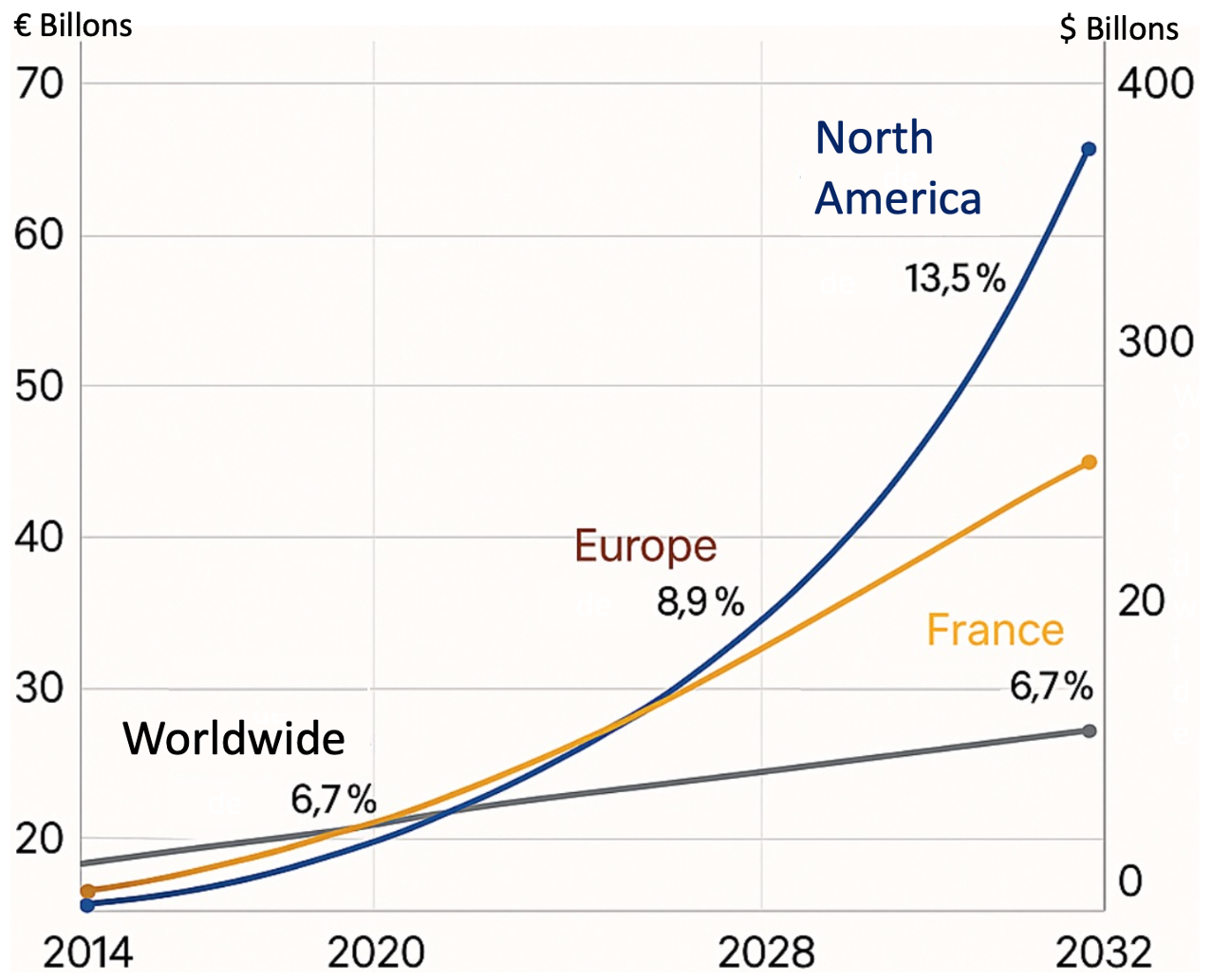
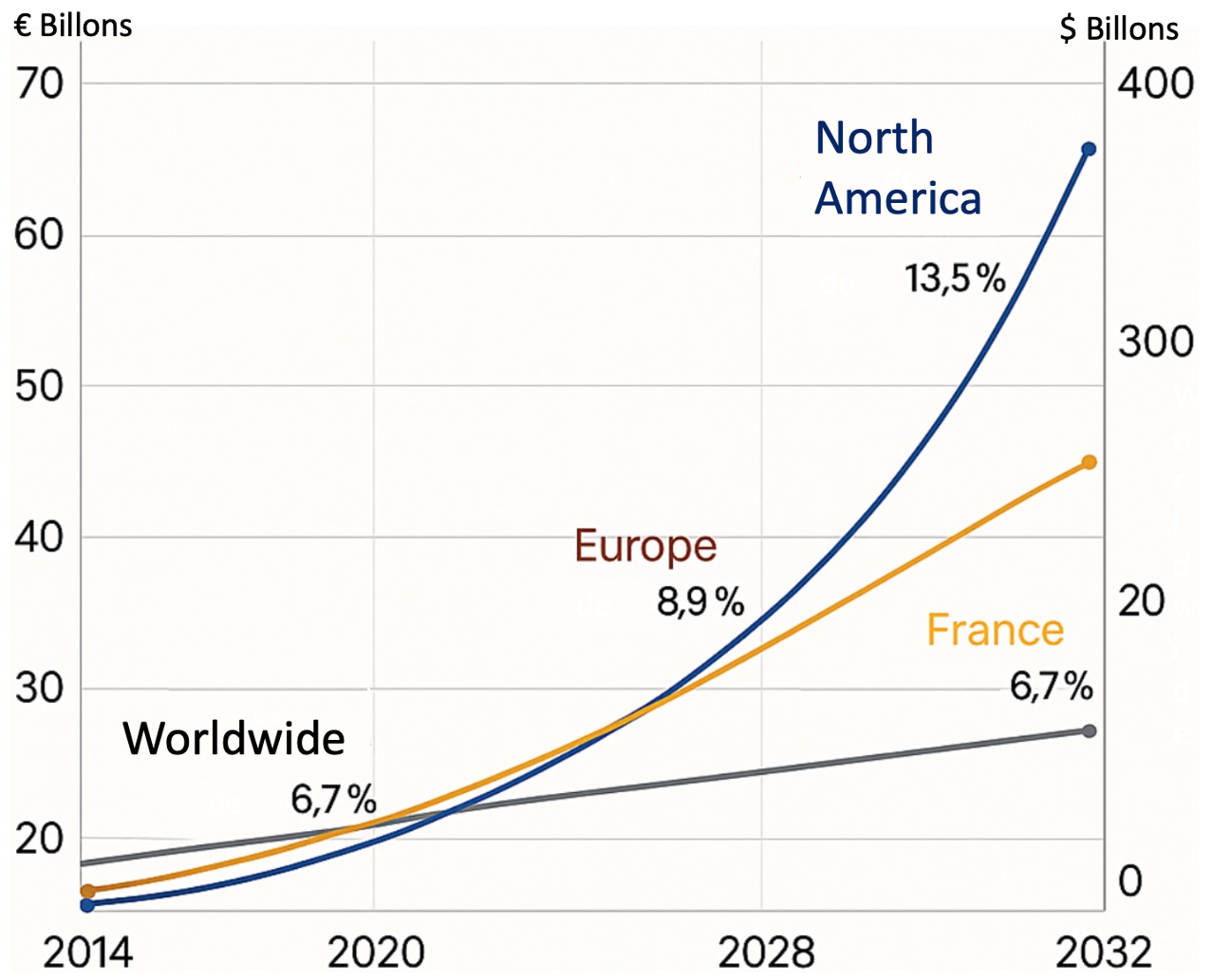
% Compound Annual Growth Rate (C) BuyTryShare 2025 – All rights reserved.

The QR Code Explosion: From Industrial Innovation to an Essential Digital Marketing Tool

Global adoption on the rise

Invented in 1994 by Masahiro Hara at Denso Wave to speed up the tracking of car parts, the QR code was initially a purely industrial solution.

For a long time, it remained out of the public eye, used mainly in the logistics and manufacturing sectors.

The real democratisation began in the 2010s with the spread of smartphones capable of reading these codes without third-party applications.

But it was the COVID-19 pandemic that acted as a global catalyst: to limit physical contact, QR codes and digital menus became the norm in restaurants, public places and events.

Today :

  • 📈 +433% growth in scans between 2021 and 2023 (source: Mindgate).

  • 🌍 2.2 billion users expected by 2025 (source ElectroIQ).

  • 🇫🇷 In France, 66% of consumers have already used a QR code (source: Scanova)

The QR code has evolved from a utilitarian tool to a key vector of customer interaction. It has won the trust of users out of necessity… and has remained so for its practicality.

Diversified and Innovative Uses

The QR code has been transformed to meet the needs of businesses, governments and consumers. Here’s how:

Marketing and Advertising

  • 40% of scanned QR codes are linked to marketing activities.

  • Examples: Redirects to promotions, competitions or exclusive content.

Case in point: the Puma brand has integrated QR codes into its shop windows to offer ‘surprise’ discounts that can only be accessed by scanning. The result: a 20% increase in the number of people entering the shop.

BuyTryShare tip: Use the QR code as a trigger for instant rewards to boost customer engagement.

Contactless payments

  • Market estimated at $45.9 billion in 2032.

  • QR codes integrated into payment applications such as PayPal, Lydia and Alipay.

Case in point: in China, over 90% of mobile payments are made using QR codes.

Why it works: Fast, secure, contactless – ideal in times of health scares.

BuyTryShare tip: If your site or application offers payment, integrate a QR mode to speed up the purchase and reduce basket abandonment.

Restaurants and hotels

  • 70% of restaurants in Spain use QR code menus, a trend that is also strong in France.

For example: establishments like Big Mamma in France offer access to an interactive menu, with the option of ordering directly from your smartphone.

Advantage: lower printing costs, instant updates, and insights into the most popular dishes.

BuyTryShare tip: use evolving QR codes to display menus, daily offers and integrate quick-fill review forms.

Logistics and Transport

  • Use to track parcels, manage stocks or provide travel information.

Case study: FedEx integrates QR codes for contactless parcel drop-off and pick-up.

Strategic advantage: fewer human errors, faster customer service.

BuyTryShare tip: add QR codes to your packaging for real-time tracking or quick access to instructions for use.

Health

  • QR codes used for vaccination certificates, COVID-19 test results and access to medical records.

Case in point: the Health Pass in France was based on reading secure QR codes

Impact: citizens have learned to trust QR codes for sensitive information.

BuyTryShare tip: for services related to health or well-being, use QR codes for quick check-ins, document transmission or to make appointments.

Revealing statistics

  • 2.2 billion users by 2025.

  • 48% of Americans scan a QR code several times a month.

  • 42% of French people have made a payment using a QR code.

  • The QR payment market is expected to be worth $8 trillion by 2029.

Business translation: the QR code has become a natural gesture for billions of consumers, from reading content to making a purchase.

Why integrate QR codes into your marketing strategy?

1. Instant interaction

  • Create a frictionless experience: from poster to smartphone in 1 scan.

2. Collecting valuable data

  • Track who scans where and when: valuable information for your future campaigns.

3. Personalised marketing

  • Offer dynamic experiences: redirect to a site, a promotion or a form depending on the profile or the moment.

4. Cost reduction

  • Less printed material, greater flexibility (instant changes to QR-linked content without reprinting).

BuyTryShare tip: use Dynamic QR Codes, which allow you to change the URL or the content behind the code without changing the visuals, for greater marketing agility.

Conclusion

The QR code is now an essential part of omnichannel marketing. It seamlessly connects the physical and digital worlds, while offering opportunities for personalisation, rapid interaction and strategic data collection.

At BuyTryShare.com, we can help you take advantage of this revolution to turn every interaction into an opportunity for conversion and loyalty. Our initial feedback on its use in TV is edifying….

The question is no longer ‘Should you use QR codes?’, but ‘How can you get the most value out of them?’

When live meets influential: why Gen Z is the unexpected lever for reenchanting TV advertising

GenZ: a generation that rejects traditional advertising?

Advertising is going through a crisis of relevance. Generation Z, lulled by on-demand content, social networks and Ad-Blockers, seems to have developed a natural immunity to traditional advertising formats. Yet a recent study by Live Nation reveals an unexpected opportunity: 68% of young people in this generation prefer to have real experiences rather than interact solely in the digital world. They want something tangible, something authentic, something to share.

So how can brands reconnect with a generation that seems to be slipping away from them? By focusing on experience, recommendation and social proof. That’s exactly what BuyTryShare offers.

Live experience as the new black gold for brands

Advertising is going through a crisis of relevance. Younger generations, particularly Gen Z, have grown up in a world saturated with images, notifications and omnipresent advertising messages. Accustomed to personalised content and short formats, they are turning away from top-down communication and over-marketed messages. Linear television is losing its lustre, and even traditional digital formats don’t really grab their attention any more.

However, a recent study by Live Nation reveals a counter-intuitive fact: 68% of young people prefer face-to-face experiences to purely digital interactions. Far from rejecting the link with brands, Gen Z is calling for more immersive, sincere, experiential formats. This need for concreteness, authenticity and sharing is redefining the rules of the advertising game.

Live experience as the new black gold for brands

Live events – concerts, festivals, interactive exhibitions, brand happenings – become catalysts for emotion and memory. They are emotionally resonant spaces where the audience feels engaged, active and connected to the brand. These experiences leave a lasting impression on participants, far more than any advertising banner or generic spot.

For Gen Z, attending a concert, taking part in a brand activation or enjoying an immersive experience is not only a moment of pleasure, but also an opportunity to create personal content to share with their network. And this content, generated by the users themselves, has a much higher value in the eyes of their peers than that produced by the brand. In this way, live events become fertile ground for advertising campaigns that are truer, more human and therefore more effective.

When nano-influencers become the real influencers

The Live Nation study also highlights a fundamental change. The model of influence as we’ve known it over the last ten years is changing: trust is no longer being placed in the hands of Instagram stars, but in the hands of ‘peers’, people we know or identify with. What we now call nano or micro-influencers: satisfied customers, engaged fans. Figures that are too visible, too sponsored, too smooth lose credibility. Gen Z puts more trust in those they consider to be their equals: friends, acquaintances, profiles they can identify with.

This is where nano-influencers come in. They may only have a few hundred or a few thousand subscribers, but their voice carries weight because it is perceived as authentic and disinterested. BuyTryShare builds on this very dynamic. By identifying satisfied consumers, offering them the opportunity to give a sincere account of their product experience, and then amplifying this account via powerful distribution channels such as TV or the press, the brand restores trust and closeness with its audience. It’s no longer celebrities who recommend a product, but people ‘like us’, and that changes everything. s real users.

BuyTryShare is based on these authentic voices. Its model enables a brand to select consumers who have tested and approved a product, then transform their reviews into advertising content that is widely distributed. A more credible, more human and, above all, more effective approach.

BuyTryShare: social proof in advertising format

In a hyper-connected world, social proof has become a key decision-making factor. Before making a purchase, we read reviews, look for unboxing videos and scrutinise comments. BuyTryShare’s strength lies in bringing social proof – usually confined to Google reviews or online comments – into the most powerful channels: TV, CTV, the press and cinema. By hybridising customer recommendation and media power, BuyTryShare is reinventing advertising, capitalising on this natural trend and transposing it into a mass advertising universe. Imagine a TV commercial in which customers express, simply and sincerely, why they liked a particular product or service. No marketing script, no promotional filter: just real words spoken by credible faces. Thanks to a technological and data-driven approach, BuyTryShare can select the best testimonials, make them compatible with traditional media formats, and measure their impact. The result: advertising that inspires confidence, captures attention and generates action.

A TV ad is no longer just a promise: it’s a customer telling their story, on their behalf. It’s a true story. And for Gen Z, who value authenticity above all else, that makes all the difference.

Conclusion: reconciling mass media and intimacy

Big media campaigns are often contrasted with the intimate communication of social networks. In this world saturated with messages, it’s the real voices that shine through. Gen Z doesn’t want to be targeted, it wants to be inspired. They are not looking to consume a promise, but to live an experience. By combining the power of advertising screens with the sincerity of consumer reviews, BuyTryShare is proposing a new contract between brands and audiences and showing that it is possible to reconcile the two. By transforming the voice of the customer into an advertising message, we combine the power of reach with the finesse of emotion, combining BRANDING & PERFORMANCE. For advertising sales houses and advertisers, this is a unique opportunity to reconnect with Gen Z – not by forcing the message, but by giving a voice to those who really matter. In this new era of communication, authenticity is becoming a strategy. And television advertising, far from being dead, can once again become a trusted medium, provided it is given a human face. This is perhaps the greatest role that Gen Z can play in the evolution of the media: giving advertising back its ability to touch, convince and inspire.

A contract based on trust, emotion and proof. Could this be the future of TV advertising?

2030: TV won’t be what it used to be – and neither will advertising

Faced with this technological revolution in the way television content is consumed, the question is no longer ‘do we need to adapt? but ’how do we reinvent media performance in a multi-distributed, connected world driven by real engagement?

1. Audience fragmentation = the end of certainties

Content consumption has become totally polymorphous: AVoD, SVoD, BVoD, replay, FAST TV, livestreams on social networks, video podcasts… Audiences no longer gather at the same time, or on the same screens. They disperse, zap, choose, return.

For brands and advertising agencies, this means the end of mass media in the traditional sense of the term. Reach needs to be rethought: no longer in terms of raw volume, but in terms of quality of engagement, trust and contextual relevance.

Especially as the number of distribution platforms continues to multiply, fragmenting both attention and budgets. Advertising can no longer be content with traditional formats. It needs to be integrated seamlessly, natively and personalised into a variety of environments, taking account of consumers’ actual behaviour.

2. Brands need more credible and measurable levers

Today, what influences a purchase is not (just) the repetition of an advert. It’s reviews, product tests, recommendations from friends and family, and video reviews. It’s the famous social proof. And it’s everywhere.

Consumers trust their peers more than they trust traditional advertising pitches. And this trust is now measurable: engagement rate, viewing time, click-through rate, purchase intention…

At BuyTryShare, we believe that advertising should no longer ignore this social dimension. It has to integrate it, make it activable, and use it to drive campaigns. Not just as a bonus, but as a driver of credibility and conversion.

Our approach? A technology that turns a brand’s consumers into ambassadors who can be seen in its advertising, broadcast on all screens. This combines the power of media channels with the proximity and authenticity of UGC (User Generated Content) content..

3. The Ad-Sales House of the future: data-driven, agile and ROI-oriented

Advertising sales houses need to change. In a multi-distributed, data-driven world, their role is less to sell space than to create value. This implies new offerings, new KPIs, and a logic that is more performance-oriented than pressure-oriented.

It’s also an opportunity: by relying on intelligent activations based on behavioural data and social content, advertising sales houses can offer more engaging, more effective and better monetised advertising experiences.

BuyTryShare (with its PoCs) is part of this dynamic: a concrete test to measure the impact of integrating social proof into a segmented TV campaign (as in cinema, but also in the press). Initial results show an increase in attention, a better perception of the brand and a leverage effect on sales.

4. TV & social proof: a sacred union for 2030?

Connected TV, IP boxes and addressable environments now enable advertising content to be finely targeted and personalised. But why not go even further?

What if, alongside the actor or model, a real customer appeared? A satisfied user, a credible micro-influencer, a witness to the value of the product?

This hybrid between social proof, authentic content and media power is BuyTryShare’s mission. And we are convinced that it will be a major driver of advertising effectiveness in the years to come.

It also opens the way to new business models: creation of campaigns based on content produced by consumers themselves, reduction in production costs, customisation of visuals according to audience segments, etc. Advertising is becoming alive, participative and connected to usage.

2030 is tomorrow.

Change is already here. It’s no longer a question of resisting, but of evolving. Testing, daring, measuring. Those who know how to adapt will be one step ahead of the market.

At BuyTryShare, we’re offering advertising sales houses a new way forward: advertising enhanced by the voice of the consumer. We believe in advertising that is more human, more intelligent and more effective. Advertising that inspires as much as it convinces.

Why not talk about it?

Join us in testing a new way of thinking about advertising – more connected, more credible, more effective.

👉 Let’s talk about your BuyTryShare PoC today.